Types of Dental Implants: A Practical Comparison
Not all implants are the same brand, surface, or connection geometry — and the differences matter over 20 years. Dr. Cansu Öztürk explains the categories, brands, and connection types we use at GC Clinic, and what each is best suited for.
Categories of dental implant
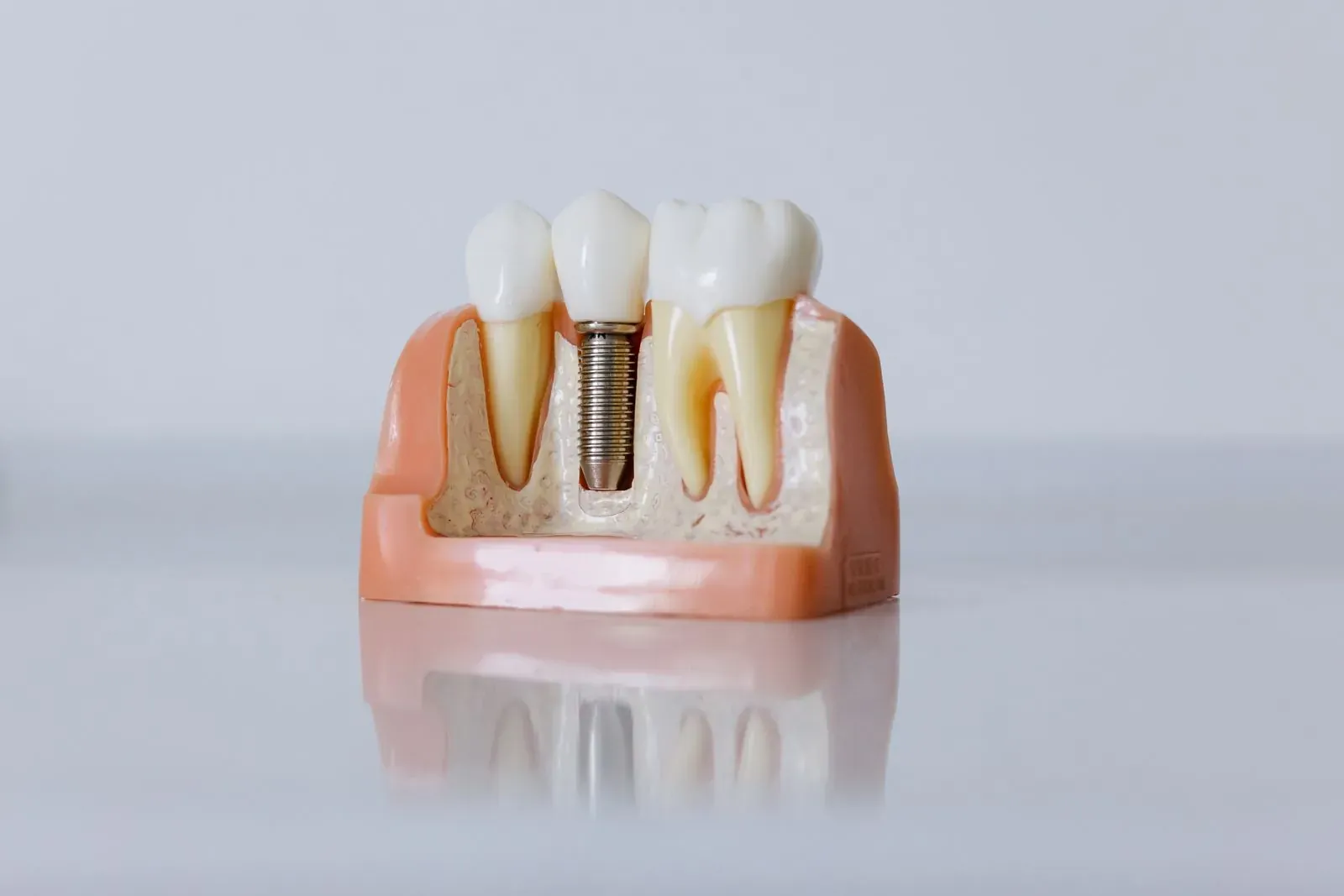
Most dental implants fall into one of three categories. Endosteal implants are placed directly into the jawbone — these are the standard titanium screws used in 95%+ of cases. Subperiosteal implants sit on top of the bone, under the gum — historically used for severe atrophy, now largely replaced by bone grafting and zygomatic implants. Zygomatic implants anchor in the cheekbone for severe maxillary atrophy and are placed under general anaesthesia.
Brands we use and why
At GC Clinic, our default implant systems are Straumann and Neodent. Both are owned by the Straumann Group and share manufacturing standards. The selection within these systems depends on bone density, immediate-load suitability, and prosthetic plan. We do not use generic or budget brands — long-term part availability and abutment compatibility matter when the implant lives in your mouth for 20+ years.
Connection geometry — why it matters
The connection between implant and abutment is the most-loaded interface in the system. Modern implants use either internal hex, internal octagon, or conical (Morse taper) connections. Conical connections (Straumann CrossFit, Neodent Grand Morse) seal microbially and resist micro-movement — both improve long-term bone stability around the implant collar. Older external hex connections still work but show more crestal bone loss at 10+ years.
Surface treatment
The implant surface is etched and sometimes acid-treated to increase bone-to-implant contact area. Straumann’s SLActive surface accelerates osseointegration to 3–4 weeks in healthy patients. Standard SLA surface integrates in 6–8 weeks. Smooth machined surfaces (used in the 1990s) are obsolete. The surface is not visible to the patient but it matters clinically.
Single-tooth vs multi-tooth vs full arch
For one missing tooth, a single implant + crown is the standard. For multiple adjacent missing teeth, an implant-supported bridge uses 2 or 3 implants to support 3–4 teeth. For a full arch, options include 4 implants (All-on-4), 6 implants (All-on-6), or fewer implants supporting an overdenture that clips on and off. The bone volume and bite forces dictate which works for you.
Immediate vs delayed loading
Immediate-load means a temporary crown goes on the implant the same day. This works only if primary stability is high (>35 Ncm insertion torque) and the bite can be controlled. Delayed loading — fitting the crown 4–6 months after surgery — remains the safer default and the option we recommend for posterior single implants. We do not promise immediate-load on every case; the bone has to support it.
What this means for your plan
Every implant case at GC Clinic starts with a CBCT scan and a written plan. We list the brand, model, length, and diameter of the implant proposed, with a back-up option if anatomy demands a change at surgery. Our published implant pricing shows the bands by brand. Read more on our brand comparison for the longer technical breakdown.
Frequently asked questions
Which implant brand does GC Clinic use?
Straumann (Swiss) and Neodent (Brazilian, owned by Straumann) for the majority of cases. Nobel Biocare for specific indications. We do not use unbranded or generic implants — the long-term abutment availability, prosthetic compatibility, and surface science are not equivalent. The brand is not a marketing point; it is a 20-year reliability decision.
What is the difference between Straumann and Neodent?
Both are owned by the same group and share manufacturing standards. Straumann’s BLT and BLX lines target advanced cases with hard or soft bone challenges. Neodent uses a similar Grand Morse connection at a lower price point. For most standard cases, Neodent delivers equivalent clinical outcomes at materially lower cost.
Are zirconia implants better than titanium?
Zirconia implants exist and have niche uses — patients with confirmed titanium hypersensitivity (rare, around 0.6%) or those with extreme aesthetic concerns where titanium might show through thin gum. For 95% of cases, titanium remains the gold standard with 30+ years of clinical data. Zirconia data extends only to about 12 years.
What is an All-on-4?
All-on-4 is a full-arch rehabilitation supported by 4 implants — two straight in the front, two angled at 30–45° in the back. It allows fixed teeth on the same day for many patients and avoids sinus lifts in the upper jaw. Not all candidates qualify; bone volume and bite forces matter. We assess with CBCT before recommending.
Will the implant set off airport metal detectors?
No. Modern dental implants are titanium and small enough not to trigger walk-through metal detectors. They will show on X-ray screening but airport security is familiar with them. You do not need any documentation.