
Tooth Pulp Inflammation: Causes, Symptoms, and When You Need a Root Canal
Pulpitis is the medical name for an inflamed dental nerve, and the difference between reversible and irreversible pulpitis decides whether you need a deep filling or a root canal. Dr. Cansu Öztürk explains the symptoms, causes, and the diagnostic process used at GC Clinic.
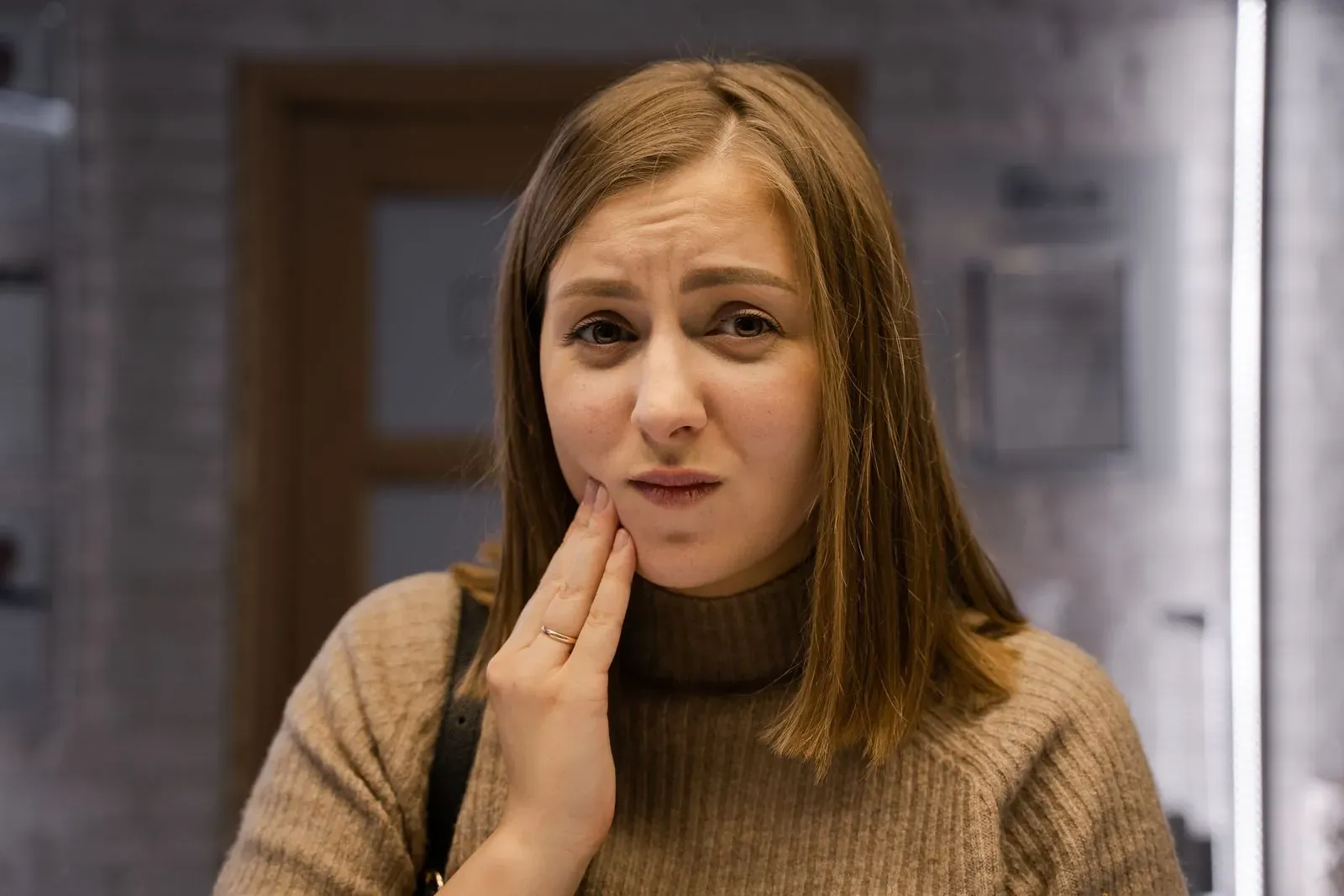
What the pulp does and why inflammation matters
The pulp is the soft tissue at the centre of every tooth — nerves, blood vessels, and connective tissue housed in a sealed chamber. It senses temperature and pressure, and during tooth development it lays down dentine. Once a tooth is fully formed, the pulp’s main role is sensory; we can survive without it. But when it becomes inflamed, the pressure inside the closed chamber has nowhere to go, and that is what produces the classic toothache.
Causes of pulp inflammation
- Deep decay — bacteria reach the pulp through dentine tubules even before they breach the chamber.
- Recent restoration — large fillings or crowns generate heat and irritate the pulp; symptoms can take 2–6 weeks to settle.
- Trauma — a sports knock, a fall, biting on a stone — even without visible damage, the pulp can bruise.
- Cracked tooth — micro-fractures allow bacteria to travel through the dentine.
- Repeated thermal cycling — bruxism produces heat that slowly damages the pulp.
- Periodontal disease — bacteria can enter through the root tip via deep pockets.
Reversible vs irreversible — the critical distinction
The treatment depends entirely on which stage you are in. Reversible pulpitis: short sensitivity to cold, no spontaneous pain, no night pain. Treatment is to remove the irritant — replace a leaking filling, apply a calcium silicate liner, treat the bruxism. Irreversible pulpitis: spontaneous throbbing, lingering pain after thermal stimulus, night pain, or pain on biting. Treatment is root canal or extraction.
How we diagnose at GC Clinic
Diagnosis combines symptom history, cold testing with refrigerant spray, percussion testing, biting tests on a Tooth Slooth, and periapical X-ray. CBCT is reserved for cases with unclear anatomy or suspected vertical root fracture. Electric pulp testing helps when cold testing is inconclusive — a non-vital tooth gives no response.
Reversible pulpitis treatment
If we catch the inflammation early, we have several conservative options: replacing a leaking filling, applying a calcium silicate liner (Biodentine or MTA) over a deep cavity, prescribing a short course of NSAIDs, and reviewing at 4–6 weeks. Approximately 75–80% of reversible pulpitis cases settle with this approach.
Irreversible pulpitis — root canal
Once the pulp is irreversibly inflamed or necrotic, root canal is the tooth-saving treatment. The procedure: anaesthesia, rubber dam isolation, access through the crown, mechanical cleaning of the canals with rotary nickel-titanium files, irrigation with sodium hypochlorite, three-dimensional filling with bioceramic sealer and gutta-percha, and a permanent coronal restoration (usually a crown for posterior teeth). Two visits, 60–90 minutes each.
What we do not promise
Root canal success rates are 85–93% over 10 years for primary cases, lower for retreatment. We do not claim 100% success — it does not exist in endodontics. The honest 7–15% that fail need either retreatment, apicectomy, or extraction. Read the wider root canal treatment overview and our step-by-step guide.
Frequently asked questions
How do I know if my pulp is just inflamed or actually dying?
The difference is reversible vs irreversible pulpitis. Reversible: short, sharp pain to cold that stops within 5–10 seconds. Irreversible: spontaneous throbbing, lingering pain after cold, pain that wakes you at night, or tenderness when you bite. The first responds to a deep filling; the second needs a root canal. Dr. Öztürk confirms with cold tests and sometimes electric pulp testing.
Can pulp inflammation heal on its own?
Reversible pulpitis from a recent filling or mild trauma can settle over 2–4 weeks if the irritant is removed. Once the pulp is irreversibly inflamed — necrotic tissue inside the chamber — it does not heal. Waiting in this stage only allows infection to spread to the bone, and what could have been a simple root canal becomes a complicated one with an abscess.
Is a root canal as painful as people say?
Modern root canals with proper anaesthesia and rotary instruments are no more uncomfortable than a deep filling. The reputation comes from infected, untreated cases where anaesthesia is harder to achieve. We use intraligamentary supplementation and, when needed, a 24-hour course of antibiotics before treatment to make anaesthesia predictable.
Will my tooth darken after a root canal?
Anterior teeth can darken slowly over 2–5 years after root canal because dentine loses its blood supply. We mitigate this by sealing the access cavity with a tooth-coloured composite over a resin-based root filling. If discolouration appears, internal bleaching through the access cavity lightens it.
Is there an alternative to root canal?
For irreversible pulpitis, the alternatives are extraction (followed by implant or bridge) or doing nothing (which leads to abscess and tooth loss). Pulp regeneration techniques exist for immature teeth in young patients but are not predictable in mature adult teeth. For most cases, root canal is the tooth-saving option.