Tooth Gap Treatment in Istanbul: Composite, Aligners, or Veneers
Closing a tooth gap is rarely about choosing between “quick” and “good.” Dr. Cansu Öztürk explains the three categories of gap, the four treatment paths, and the decision tree we use at GC Clinic to match the right tool to your case.
Three categories of tooth gap
Gaps are not all the same and the treatment is not interchangeable. We sort them into:
- Midline diastema — single gap between the upper centrals. Most common. Easiest to treat.
- Generalised spacing — multiple small gaps across the arch. Usually from a small tooth/large jaw mismatch.
- Pathological gaps — appearing in adulthood from gum disease, bone loss, or tooth drift after extraction. Treat the underlying cause first.
The four treatment paths
Depending on cause and patient preference, we use one of four approaches:
- Composite bonding — single visit, additive, reversible. Best for gaps up to 3 mm.
- Aligners (Invisalign Lite, 3M Clarity, Spark) — 4–8 months, moves teeth without restorations. Best for multiple gaps or when proportions matter.
- Porcelain veneers — when shade and shape both need changing alongside gap closure. 10–15 year longevity but irreversible.
- Frenectomy + closure — when a high labial frenum is the cause, the frenum is released first under local anaesthesia (10 minutes), then composite or aligners follow.
How we decide at GC Clinic
Dr. Öztürk reviews photographs and any X-rays before recommending. The decision tree we use:
- Is the gum healthy? If not — perio first, no closure yet.
- Is there a high frenum? If yes — frenectomy first.
- Is the gap under 3 mm with good tooth proportions? — composite bonding.
- Are there multiple gaps or do proportions need adjusting? — aligners.
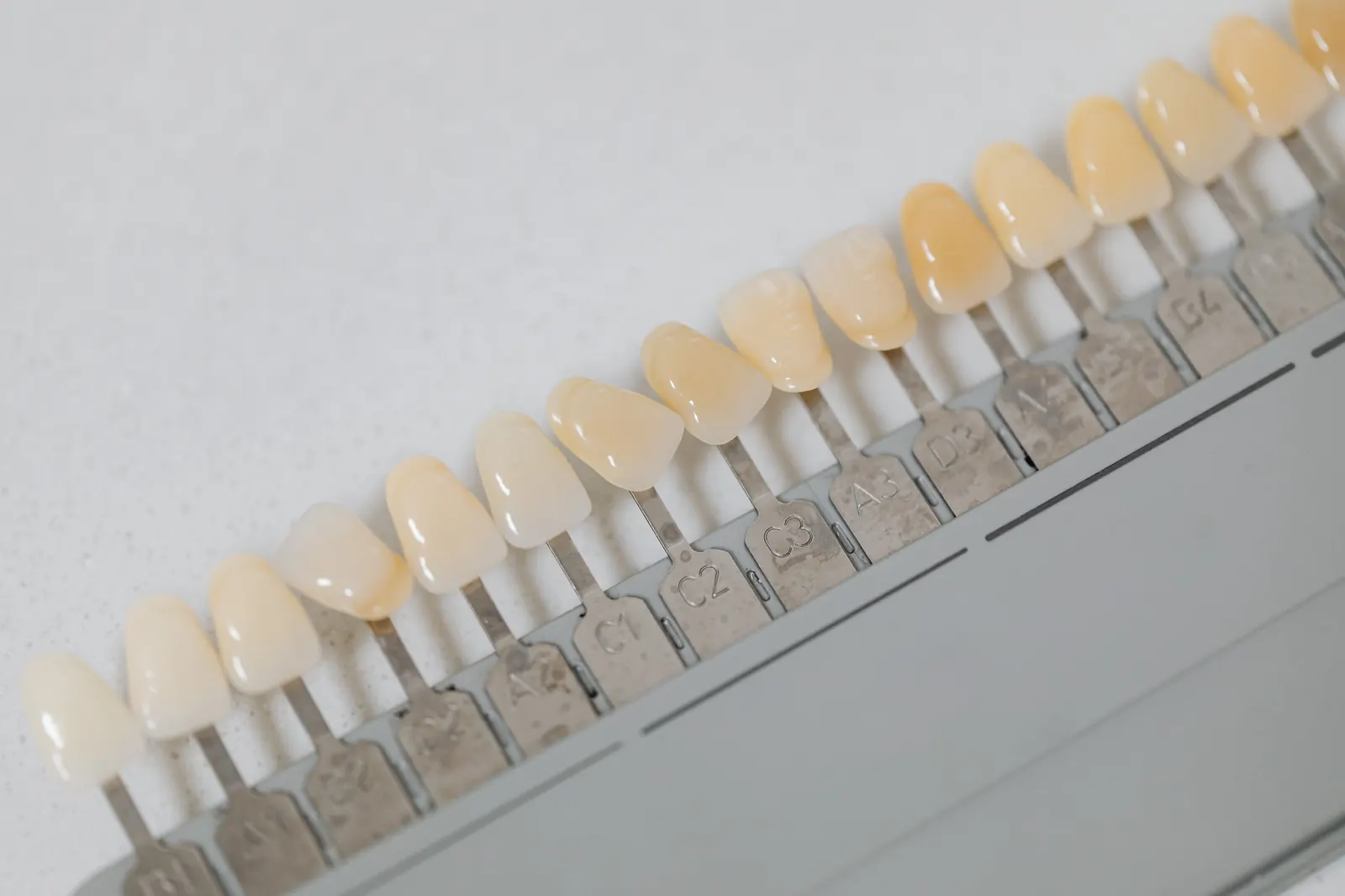
- Does the shade or shape also need changing? — veneers.
What to expect on a treatment trip
Composite gap closure is a single 90-minute visit. Aligners are remote — we scan and plan in Istanbul over 2 days, then ship aligners to your UK address with monthly progress check-ins by video. Veneers are two visits five days apart (prep + bond). Most UK patients combine the first visit with hygiene, whitening, or a check-up.
Why retention matters
Whatever the closure method, the long-term result depends on retention. After aligners, a fixed wire bonded behind the front teeth holds them in place — without it, gaps reopen within 2 years in approximately 40% of cases. After composite, retention is the bonding itself; we polish at 6 and 12 months. After veneers, the porcelain is the retention.
Pricing and consultation
Each path has different pricing and we do not quote without seeing your case. The quote wizard gives a per-treatment range; the personalised plan comes after the video consultation. Read more on composite vs veneer trade-offs for narrowing the cosmetic decision.
Frequently asked questions
Is a tooth gap a medical problem or just cosmetic?
Most diastemas are purely cosmetic. The exceptions: gaps caused by gum disease (the teeth are drifting because bone is lost) or gaps from tongue-thrust that also affect speech and swallowing. We screen for these before recommending closure — if the cause is pathological, we treat the disease first.
How much does it cost to close a gap in Istanbul vs UK?
Composite bonding at GC Clinic is roughly a third of UK private pricing. Aligners (Invisalign Lite) are 30–40% cheaper. Veneers are 50–60% cheaper. The cost difference makes travel worthwhile for multi-tooth or full-smile work; for a single composite, savings rarely justify the trip on cost alone.
Can adults still use braces or aligners to close a gap?
Yes — adult orthodontics is now standard. Invisalign Lite or 3M Clarity Aligners close most diastemas in 4–8 months. The advantage over composite or veneers: the gap closes by moving teeth, not by adding material, so the proportions stay natural. Retention with a fixed wire behind the teeth is mandatory afterwards.
Can a gap close on its own?
Childhood gaps often close as the canines erupt and push the front teeth together. Adult gaps do not close spontaneously — if anything, untreated gum disease can widen them. If you have had the same gap for over 5 years as an adult, it is not closing without intervention.
What happens if I do nothing?
A stable gap with healthy gums is not harmful. Food impaction is the main practical issue — flossing more carefully through the gap usually solves it. Aesthetics are personal: many patients keep their gap (Madonna, Vanessa Paradis, Anna Paquin) and we do not push closure if the patient is happy.