Impacted Wisdom Tooth Removal: When It Is Necessary, How It Goes, What Recovery Looks Like
An impacted wisdom tooth — one that cannot fully erupt because of insufficient space, wrong angle, or bony coverage — is one of the most common surgical indications in adult dentistry. Not every impacted wisdom tooth needs to be removed. The decision turns on specific clinical findings rather than a general policy. Here is the realistic picture.
What “impacted” actually means
Wisdom teeth (third molars) are the last teeth to develop, typically erupting in late teens to mid-20s. The modern human jaw is on average smaller than the jaws our wisdom teeth evolved for, so impaction is common — about 25% of UK adults have at least one impacted wisdom tooth. The classification depends on the angulation:
- Mesioangular: tilted toward the front of the mouth. Most common pattern. Often gets stuck against the second molar.
- Vertical: upright but lacking space to fully erupt. Usually the easiest to remove if removal is needed.
- Distoangular: tilted toward the back. Can be technically harder to extract.
- Horizontal: lying sideways. Often requires bone removal and tooth sectioning.
Additionally, the depth of impaction (soft-tissue, partial bone, full bone coverage) affects the surgical complexity.
When to leave them alone
Asymptomatic, non-pathological impacted wisdom teeth in patients who clean the area well do not necessarily require removal. NICE guidance (UK National Institute for Health and Care Excellence) is that prophylactic removal of asymptomatic wisdom teeth is not recommended. The criteria for leaving them in:
- No history of pericoronitis (gum infection around an erupting wisdom tooth).
- No detectable cyst or pathology.
- No decay in the wisdom tooth or the second molar.
- Adequate access for cleaning.
- No structural risk to adjacent teeth.
When removal is appropriate
- Recurrent pericoronitis: repeated episodes of gum inflammation around the wisdom tooth (swelling, pain, sometimes systemic symptoms).
- Decay in the wisdom tooth that is non-restorable.
- Decay in the second molar caused by the impacted wisdom tooth (food trap, inability to clean).
- Cyst formation (dentigerous cyst, periapical lesion).
- Crowding contributing to orthodontic relapse (debated; not a strong indication on its own).
- Patient symptoms — recurrent pain, jaw stiffness, swelling.
- Risk of damage to adjacent teeth — visible erosion of the second molar root.
The pre-operative assessment
A proper assessment includes:
- Clinical examination: what is visible, gum status, signs of pericoronitis.
- Periapical X-ray: 2D image of the tooth and surrounding bone.
- Panoramic X-ray (OPG): overview of all wisdom teeth and their relationship to anatomical structures.
- CBCT (3D scan): when the inferior dental nerve is in close proximity to the lower wisdom tooth roots, CBCT is essential to assess the actual nerve position and reduce the risk of nerve injury.
The CBCT decision is based on findings on the panoramic X-ray. Specific markers — diversion of the nerve canal, narrowing of the canal, darkening of the root — increase the case for CBCT. Modern UK practice and Royal College of Surgeons guidance support CBCT in these specific scenarios.
The procedure
For a typical lower impacted wisdom tooth:
- Local anaesthesia (sometimes with IV sedation for anxious patients).
- Small incision in the gum to expose the tooth and bone.
- Removal of bone covering the tooth (if any) using a high-speed handpiece.
- Sectioning of the tooth into pieces if needed (mesioangular and horizontal teeth often require this).
- Removal of each piece individually.
- Cleaning of the socket, irrigation, removal of any cyst lining.
- Suturing of the gum back over the socket.
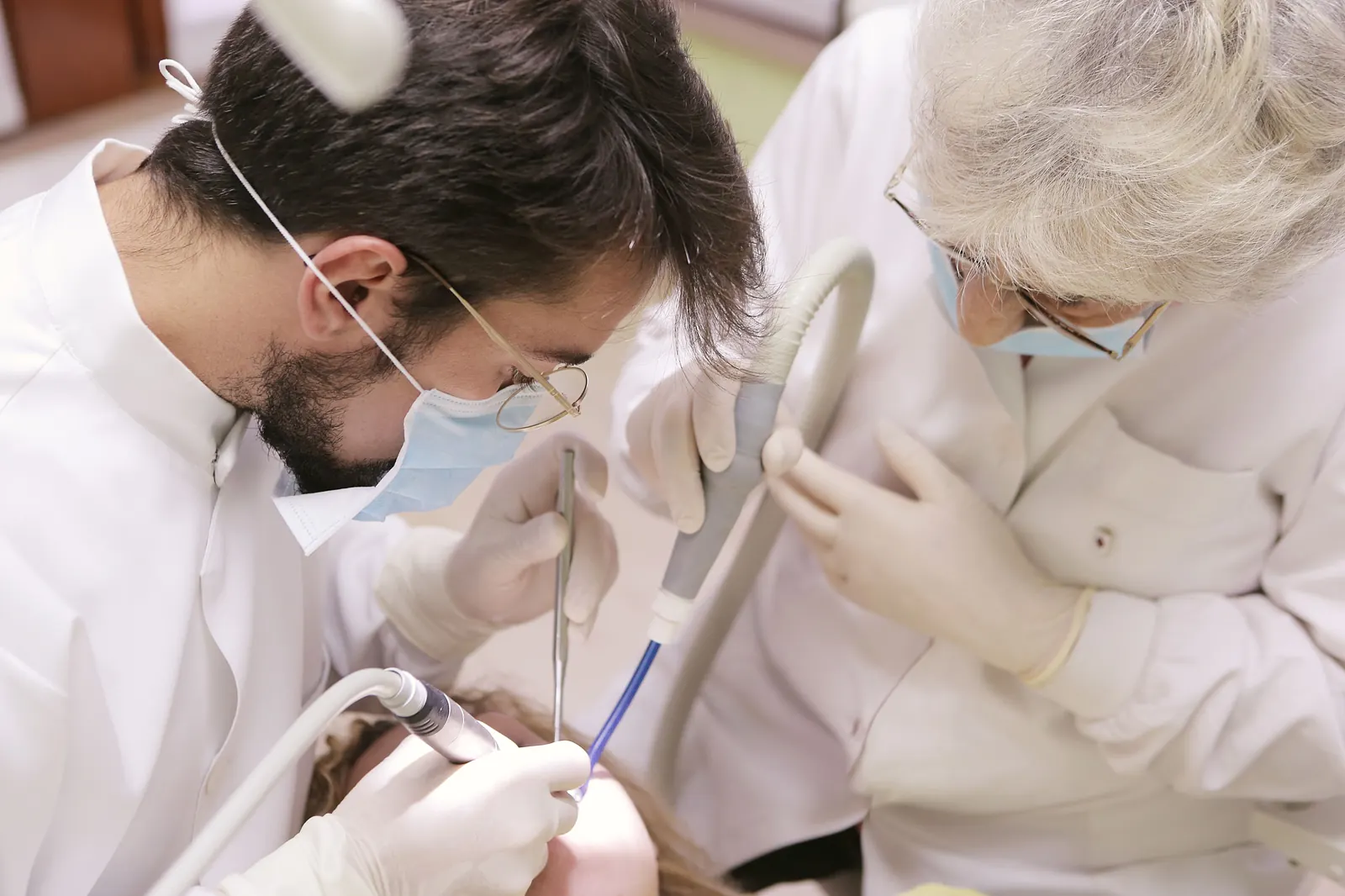
Total chair time runs 30–60 minutes for a single impacted lower wisdom tooth. Bilateral cases (both lower wisdoms) take 45–90 minutes.
Recovery
- Day 0–2: moderate swelling and stiffness in the jaw. Cold compress, OTC analgesia (paracetamol + ibuprofen rotation), soft food.
- Day 3–5: swelling peaks day 2–3 and starts to reduce. Beginning saline rinses gently from day 2.
- Day 5–10: sutures removed at 7–10 days. Most patients return to normal activity within a week.
- Week 2–4: jaw stiffness fully resolves. Soft tissue continues healing.
- Month 2–6: bone fills the socket gradually.
Risks worth knowing about
- Dry socket (5–30% in lower impacted wisdom): the most common post-op complication. Treatable with a medicated dressing.
- Inferior dental nerve injury (1–2% in close-proximity cases): temporary numbness in the lip and chin, usually resolves in 6–12 weeks; permanent in rare cases. CBCT-guided planning reduces this risk significantly.
- Lingual nerve injury (less common): numbness or altered sensation on the side of the tongue.
- Damage to second molar: uncommon with proper technique but possible with horizontally impacted teeth pressing against the second molar.
- Infection: uncommon with proper post-op care.
For UK patients considering Istanbul treatment
Wisdom tooth removal is straightforward surgery available throughout the UK NHS and private system. Travelling for it makes sense only when combined with other planned treatment (e.g. multiple impacted wisdoms removed in single session alongside other surgical work). For an isolated impacted wisdom tooth, local NHS or private treatment is usually the simpler choice. Where Istanbul does fit: complex cases involving CBCT planning, multiple bilateral impactions, or patients requesting IV sedation in a single combined session. Our extraction aftercare guide covers post-op management in more detail.
Frequently asked questions
Do I really need to have my wisdom teeth out?
Not necessarily. NICE guidance is against prophylactic removal of asymptomatic wisdom teeth. Removal is appropriate for recurrent pericoronitis, decay, cyst formation, or decay in the adjacent second molar. If your wisdom teeth are not causing problems and can be cleaned adequately, leaving them alone is a valid option.
How painful is wisdom tooth removal?
The procedure itself is performed under local anaesthesia and is not painful during. Post-op discomfort is moderate for 3–5 days, controlled by paracetamol-ibuprofen rotation. Lower wisdom teeth are typically more uncomfortable in recovery than upper. Most patients return to normal activity within a week.
Will I get dry socket after wisdom tooth removal?
Dry socket affects 5–30% of lower impacted wisdom tooth cases — higher than routine extractions. Smoking is the biggest risk factor, increasing rates 4–5×. Following post-op instructions (no smoking, no straws, no vigorous rinsing for 24 hours) reduces risk substantially. Treatment with a medicated dressing is straightforward when it does occur.
Will my UK dentist remove my wisdom teeth on the NHS?
If the criteria are met (pain, infection, cyst, decay), yes — NHS Band 2 covers extraction. Asymptomatic wisdom teeth are not removed on NHS as a matter of policy. Complex impactions or general anaesthesia cases may need NHS hospital referral with associated waiting times. Private extraction is faster but at private cost.