Dental Crowns: Materials, Techniques, and the UK-Istanbul Pricing Conversation
A dental crown covers the entire visible portion of a damaged tooth, restoring its shape, function, and appearance. The choice of crown material — porcelain, zirconia, metal-ceramic, or all-metal — has a bigger effect on cost, longevity, and aesthetics than most patients realise. Here is the practical guide.
When you actually need a crown
A crown is appropriate when:
- The tooth has lost more than half its structure to decay or fracture.
- A large filling has failed and there is not enough remaining tooth for another filling.
- The tooth has had root canal treatment and is at risk of fracture without coverage.
- An existing crown has failed and needs replacement.
- Cosmetic reasons — a single tooth that does not match its neighbours and cannot be addressed with a veneer.
A crown is not appropriate when:
- The tooth has only minor decay treatable with a filling.
- The remaining tooth structure cannot support a crown — extraction and implant or bridge is the better option.
- The tooth has a vertical root fracture or severe periodontal involvement.
The four main crown materials
Zirconia
Strongest material, increasingly the default for posterior crowns. Comes as monolithic (single block, very strong) or multi-layer (with translucent enamel layer for natural front-tooth appearance). Multi-layer zirconia for anterior teeth is now the standard at most cosmetic clinics. Lifespan 12–15+ years.
e.max (lithium disilicate)
Best aesthetic option — translucency closest to natural enamel. Slightly less strong than zirconia, so used mostly for anterior teeth and small posterior cases. Pressed (e.max Press) is the workhorse; CAD/CAM milled is fine for crowns. Lifespan 12–15 years.
Porcelain-fused-to-metal (PFM)
Older standard. Strong (the metal core gives durability) but with a visible dark line at the gum margin where the metal shows over time. Now mostly replaced by zirconia for new cases. Existing PFM crowns can last 15–20 years.
Gold
The most durable material — wears at the same rate as natural enamel and lasts 30+ years routinely. Visible. Used for posterior molars in patients who prioritise longevity over aesthetics. Some patients still prefer it for back teeth.
The procedure: two visits, normally
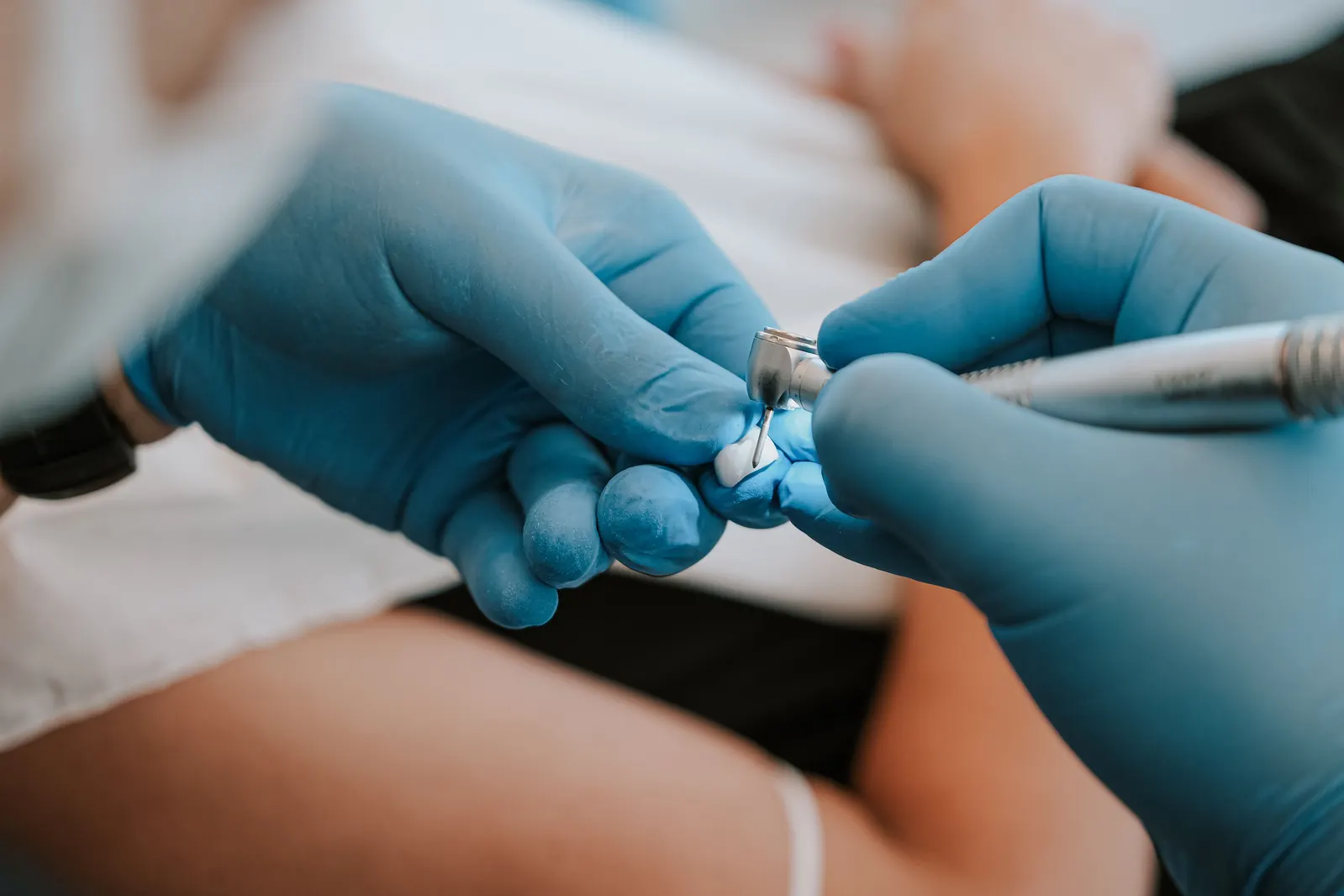
- Visit 1: tooth preparation under local anaesthesia. The tooth is shaped to receive the crown. Digital scan or impression. Temporary crown fitted. Lab fabrication takes 7–10 working days.
- Visit 2: temporary removed, final crown fitted, occlusion checked, cementation. Total chair time 30–45 minutes.
Modern CAD/CAM workflows allow same-day crowns where the lab is in-clinic and the patient does not need a temporary stage. Common in Istanbul, increasingly available in UK private practices.
Material matching: the aesthetic question
For a single anterior crown matching adjacent natural teeth, the aesthetic burden falls almost entirely on the laboratory technician. The dentist provides:
- Photographs at multiple angles in different lights.
- Shade selection (Vita 3D or similar) recorded with shade tabs adjacent to the natural teeth.
- Notes on translucency, surface texture, and any individual characteristics (subtle white spots, edge translucency).
Even with all this, single-tooth anterior crowns are the hardest case in cosmetic dentistry to perfect. Multiple try-in stages are normal. We allow for this in the visit schedule for UK patients.
What can go wrong
- Marginal leakage: if the fit at the tooth-crown junction is imperfect, bacteria invade and decay develops underneath. Detected at 6-month check-ups; addressed by re-cementation or replacement.
- Cement washout: the cement layer dissolves over years, leaving a hollow space where bacteria multiply. Replacement is the resolution.
- Crown fracture: rare in zirconia, more common in older PFM crowns. The fragment usually remains in place; replacement at the next routine appointment is the path.
- Tooth fracture under the crown: if the underlying tooth fractures, the crown comes off with the fragment. Sometimes the tooth is not restorable; sometimes another crown can be placed.
- Sensitivity: mild post-cementation sensitivity to cold for 1–2 weeks is common and resolves spontaneously. Persistent sensitivity may indicate pulp inflammation.
UK-Istanbul pricing comparison
UK private dental crowns run £450–£1,200 depending on material and laboratory. NHS Band 3 covers a metal or porcelain-fused-to-metal crown at fixed cost (around £319 in England, lower in Wales/Northern Ireland). Cosmetic-grade aesthetic crowns (multi-layer zirconia or e.max) are private-only.
Istanbul crown pricing by tier is in the packages page. Standard tier covers e.max press; premium tier covers Straumann/Nobel zirconia multi-layer; VIP includes premium multi-layer with DSD planning. The cost difference vs UK is substantial but reflects fixed UK overheads (property, regulation, labour) rather than lower clinical standards. Same materials, same techniques, same laboratory standards — different cost base. Our e.max-specific guide covers the aesthetic ceramic option in detail.
Frequently asked questions
How long does a dental crown last?
Modern zirconia and e.max crowns routinely last 12–15+ years with reasonable care. Gold crowns last 30+ years. PFM (older standard) lasts 10–15 years. The variables are bite forces, periodontal health, and home hygiene. Crowns themselves do not ‘wear out’ so much as the underlying tooth or supporting gum becomes the limit.
Will a crown ruin my tooth?
Crown placement requires removing 1.5–2 mm of tooth structure on all surfaces. The remaining tooth is permanently smaller and may need root canal treatment if the prep approaches the pulp. The decision is one of necessity — crowns are placed when the tooth would otherwise fracture or be lost, not as an aesthetic shortcut. For purely aesthetic cases, veneers or bonding are usually the better route.
Can I have a crown if I have had a root canal?
Yes — and you should. Posterior teeth with root canal treatment have substantially higher fracture rates without crown coverage. The crown protects the now-brittle tooth from splitting under chewing forces. Anterior teeth with root canal sometimes do not need a crown if structure is preserved; posterior teeth almost always do.
How does Turkish crown quality compare to UK private?
The materials are identical brands (Ivoclar e.max, Zirkonzahn zirconia, etc.). The laboratory standards are equivalent — both UK and Turkish premium labs use the same CAD/CAM equipment and ISO-certified ceramic systems. The cost difference reflects fixed UK overheads, not clinical quality. The verification is in the materials lot certification provided at discharge.