
Closing a Tooth Gap with Composite vs Veneers: When Each Wins
A small midline gap rarely needs porcelain. Dr. Cansu Öztürk explains how composite bonding closes gaps in one visit without drilling, when veneers are the better tool, and when neither is the right answer.
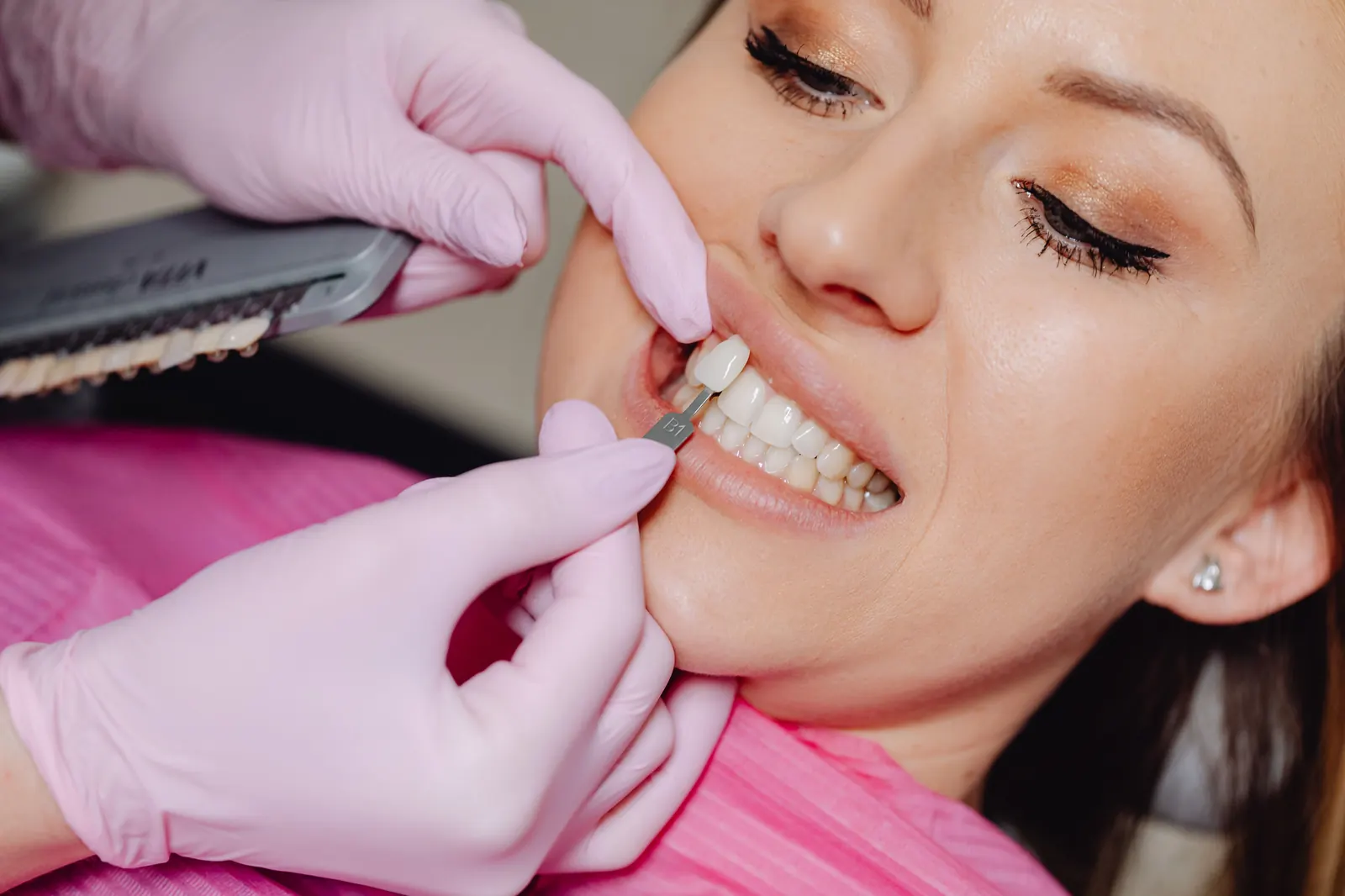
What causes a gap between front teeth
The medical name is diastema. Causes vary: small jaw with normal-sized teeth (most common), missing lateral incisors, a high labial frenum pulling tissue between the teeth, tongue-thrust swallowing patterns, or simply genetic spacing. The cause matters because closing the gap without treating the cause guarantees relapse.
Why composite often beats veneers for gap closure
For a single midline gap of 1–3 mm, composite bonding wins on three points: it is reversible (no enamel reduction), it is one appointment, and it costs roughly a third of a porcelain veneer. The trade-off is longevity — composite typically needs polishing every 18–24 months and full replacement every 5–7 years. For most patients aged 20–45, that is an acceptable maintenance cycle.
The procedure step by step
- Photographs and shade-matching against your existing enamel.
- Light air-abrasion or pumice cleaning of the bonding surface.
- 37% phosphoric acid etch for 15 seconds, rinse, dry.
- Bonding agent applied and light-cured.
- Composite layered freehand — usually a dentine shade first, then enamel shade.
- Contouring with fine diamond and tungsten carbide burs.
- Polishing through three grits — silicon carbide cup, felt wheel with diamond paste, then a high-shine polishing brush.
When composite is the wrong choice
If your gap is from missing lateral incisors and the canines have drifted into their space, composite cannot create normal-looking laterals from canines. That case needs orthodontics or implants. If you grind heavily at night, composite chips faster — a nightguard becomes mandatory. If your gap is over 4 mm, closing it with composite alone makes the front teeth look disproportionately wide.
Comparing options honestly
For comprehensive gap-closure planning we send three mock-ups: composite-only, two veneers, or four veneers (if the lateral incisors also need shape correction). Most UK patients choose composite once they see the cost and reversibility. Read our wider piece on gap-closure options including orthodontics.
Aftercare
For 48 hours after bonding, avoid coffee, red wine, and curry — the composite surface needs time to fully cure and resist staining. Brush with a non-abrasive paste; whitening pastes scratch the polish. We see you for a polish at 6 months, then yearly. The polish appointment takes 15 minutes and keeps the surface smooth.
Cost and trip planning for UK patients
Composite gap closure at GC Clinic is a single-visit procedure — most UK patients combine it with whitening or hygiene. Total time on the chair is under 2 hours. Our published pricing sits in the quote wizard. We never charge for a video consultation if you book treatment within 30 days.
Frequently asked questions
Can a small gap really be closed with composite alone?
Yes — gaps up to 2 mm close beautifully with composite bonding in a single visit. Larger gaps (3–4 mm) can also close but require careful proportioning to avoid wide-looking front teeth. Anything beyond 4 mm usually needs orthodontics first to bring the teeth closer, then composite or veneers for finishing.
Will composite look as good as porcelain veneers?
For small gaps and good light, composite is indistinguishable from porcelain to a non-dentist eye. The difference shows over time — composite stains and dulls within 4–6 years, porcelain holds its lustre for 10–15+ years. For a single gap closure, composite is the right tool. For a full smile makeover with multiple shade changes, porcelain wins.
Does the dentist drill my teeth for composite gap closure?
No. Composite bonding for a midline gap is additive — we add material onto the existing enamel without removing tooth structure. The procedure is fully reversible. This is why we recommend trying composite first before considering veneers, which do require enamel reduction.
How long does composite gap closure take?
A single midline diastema closes in one 60–90 minute appointment. We sculpt the composite freehand, layer the shades, contour with diamond burs, and polish to a high gloss. You can eat 60 minutes after the appointment finishes.
Will the gap come back?
Composite itself does not move. The gap returns only if the underlying cause was untreated — for example, a tongue-thrust habit or a high frenum (the tissue between your upper lip and gum). We assess for these before closure and treat them first if present.