
Tooth Decay Treatment in Istanbul: Stages, Costs, and What Actually Works
Tooth decay is the most common dental disease in adults, and the treatment is more nuanced than “drill and fill.” Dr. Cansu Öztürk explains the four stages of decay, when a filling is enough, and when honesty requires recommending a crown or root canal instead.
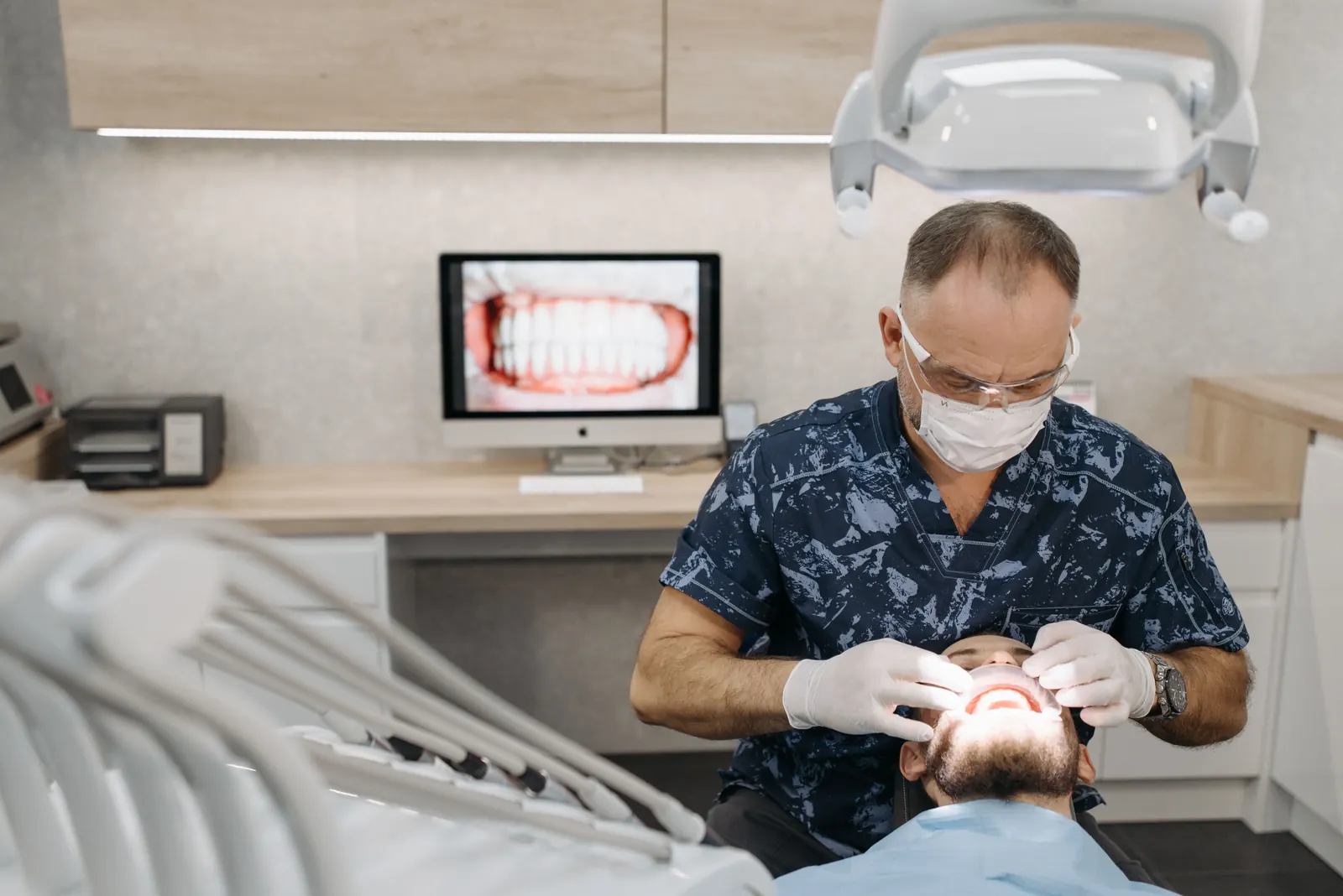
What tooth decay actually is
Decay is bacterial demineralisation of enamel and dentine. Plaque bacteria — primarily Streptococcus mutans — metabolise dietary sugars into acid, which dissolves the mineral lattice of the tooth surface. Early lesions appear as white spots; left untreated, they progress through enamel into dentine, then into the pulp chamber where the nerve lives. The progression is not linear — it accelerates once the lesion crosses the dentino-enamel junction.
Stages and matching treatment
We classify decay into four stages, and the treatment changes at each:
- White spot (initial): remineralisation with high-fluoride toothpaste (5,000 ppm) and dietary review. No drilling.
- Enamel cavity: conservative composite filling, 1–2 surfaces. 30 minutes per tooth.
- Dentine cavity: larger composite or onlay if more than half the cusp is undermined. May need a calcium silicate liner.
- Pulp involvement: root canal followed by a crown. The tooth becomes brittle once the nerve is removed.
How we diagnose at GC Clinic
Diagnosis combines visual inspection, tactile probing, transillumination for anterior teeth, and bitewing X-rays for proximal lesions. CBCT is reserved for cases where root canal anatomy is unclear or a deep lesion is close to the pulp. We do not over-diagnose — a stained groove is not a cavity unless it catches a fine probe and shows radiographic translucency.
Composite filling — what to expect
Local anaesthesia is given when the decay is in dentine. Decay is removed with a slow-speed round bur and caries-detecting dye to confirm complete excavation. The cavity is etched, bonded, and filled in 2 mm increments with light-cured composite. Total chair time: 30–45 minutes per tooth. You can eat normally once the anaesthetic wears off, usually 2–3 hours later.
When a filling is no longer enough
If more than 50% of the tooth structure is lost, a filling will flex and fracture. We move to onlay or crown territory. Onlays preserve more tooth than full crowns and are bonded with resin cement. For teeth with vertical cracks reaching the pulp floor, the prognosis drops — extraction and implant may be the more honest plan.
Cost and treatment timeline
For UK patients combining a Turkey trip with restorative work, we group fillings into one or two appointments to minimise chair time. A typical 4-filling plan takes 2 hours across 2 visits. Pricing follows the published quote wizard. We do not charge for the initial consultation if you proceed with treatment.
Prevention is genuinely cheaper
The best filling is the one you never needed. Twice-daily brushing with fluoride toothpaste, daily interdental cleaning, and a 6-monthly professional clean prevent the majority of new lesions. Sugar frequency matters more than total amount — sipping a sugary drink across two hours is worse than drinking it in one go. Read our guide on professional cleaning intervals.
Frequently asked questions
How do I know if I have tooth decay or just sensitivity?
Sensitivity to cold can come from gum recession or thin enamel without active decay. Decay usually shows as a dark spot or sticky catch on floss, and pain that lingers more than 10 seconds after a cold drink. A bitewing X-ray confirms the diagnosis — Dr. Öztürk reviews CBCT or photographs sent through the consultation form before quoting any treatment.
Can a deep cavity be treated without a root canal?
Sometimes. If the decay has not reached the pulp chamber and the tooth still tests vital, a deep filling with a calcium silicate liner (indirect pulp cap) may save the nerve. The honest caveat: 15–20% of these teeth still need a root canal within 12–24 months. We monitor with a follow-up X-ray at 6 and 12 months.
How much does tooth decay treatment cost in Istanbul vs the UK?
A composite filling at GC Clinic is £55–£95 depending on size and surface. The same filling on the UK private market is typically £180–£300. For root canal plus crown, the gap is wider — Istanbul £450–£650 vs UK £1,200–£1,800. The cost difference rarely justifies travel for a single filling, but it does for multi-tooth restorative work.
Will my filling match my tooth colour?
All fillings at GC Clinic are layered composite — there is no amalgam (silver) option. Shade is matched against your adjacent teeth using a Vita guide before placement. Anterior fillings are polished to a high gloss; posterior fillings are contoured to your natural cusp anatomy.
Can decay come back under a filling?
Yes — recurrent caries is the most common reason fillings fail after 7–10 years. The risk is higher if margins are not perfectly sealed or if your home care misses the tooth-filling junction. We re-examine all fillings annually and replace only when there is radiographic evidence of leakage, not on age alone.