Orthodontic Treatment: When and Why for Adults vs Children
Orthodontics — the alignment of teeth and correction of bite — has expanded dramatically beyond the adolescent NHS pathway most UK adults remember from childhood. Adult orthodontics now accounts for roughly 30% of cases in some private practices. The right timing and technique depend on the case, not the age of the patient.
Why orthodontic treatment matters beyond aesthetics
Crooked or misaligned teeth are not just an aesthetic concern. The functional consequences include:
- Hygiene difficulty: crowded teeth are harder to clean, leading to higher caries and gum disease rates over time.
- Wear patterns: teeth that contact incorrectly wear unevenly, sometimes severely, over decades.
- TMJ stress: bite imbalance contributes to jaw joint problems in some patients.
- Speech effects: certain malocclusions affect specific consonants and pronunciation clarity.
- Self-confidence: the aesthetic component is real and not trivial.
The clinical decision to treat or not treat balances these against the cost, time, and intrusion of orthodontic care.
Childhood and adolescent orthodontics
The optimal time to assess orthodontic need is age 7–8 — most permanent teeth have erupted by then, and interceptive treatment can prevent more complex problems later. Most cases do not need active treatment until adolescence (age 11–14), when most permanent teeth are present.
NHS orthodontic care for under-18s is funded for cases meeting the IOTN (Index of Orthodontic Treatment Need) criteria — typically score 4 or 5. This covers severe malocclusions; moderate and mild cases are private-only. Cosmetic orthodontics for children with minor crowding is generally not NHS-funded.
Adult orthodontics — the modern landscape
The four main adult options:
Clear aligners (Invisalign and equivalents)
The most common adult choice. Suitable for mild to moderate cases. Detailed Invisalign guide. Removable for eating and brushing. Treatment time 6–18 months.
Fixed ceramic braces
Tooth-coloured brackets. Less visible than metal. For cases where aligners are not predictable. Treatment 12–24 months.
Lingual braces
Inside-of-tooth fixed braces. Invisible from the front. More expensive than other options. Initial speech adjustment 1–2 weeks. Suited to professionals who need invisible treatment.
Traditional metal braces
The most cost-effective option. Visible. Effective for any case from simple to complex.
Full detail in our adult braces guide.
The orthognathic surgery alternative
For severe skeletal malocclusions — significantly under-developed or over-developed jaws — orthodontic treatment alone is insufficient. The combined orthodontic-surgical approach involves:
- Pre-surgical orthodontics to align the teeth within their respective jaws (12–18 months).
- Jaw surgery (orthognathic) to reposition the upper or lower jaw or both (under general anaesthesia, several days hospital stay).
- Post-surgical orthodontics to refine the final tooth position (6–12 months).
Total treatment time 2–3 years. NHS-funded for severe cases meeting specific criteria. Significant procedure not undertaken lightly. Specialist orthodontist and maxillofacial surgeon coordination.
Treatment planning workflow
A proper orthodontic plan involves:
- Clinical examination — bite assessment, soft tissue analysis, TMJ screening.
- Radiographs — panoramic X-ray for overview, lateral cephalogram for skeletal analysis.
- Photographs — facial and intra-oral, used for diagnosis and case documentation.
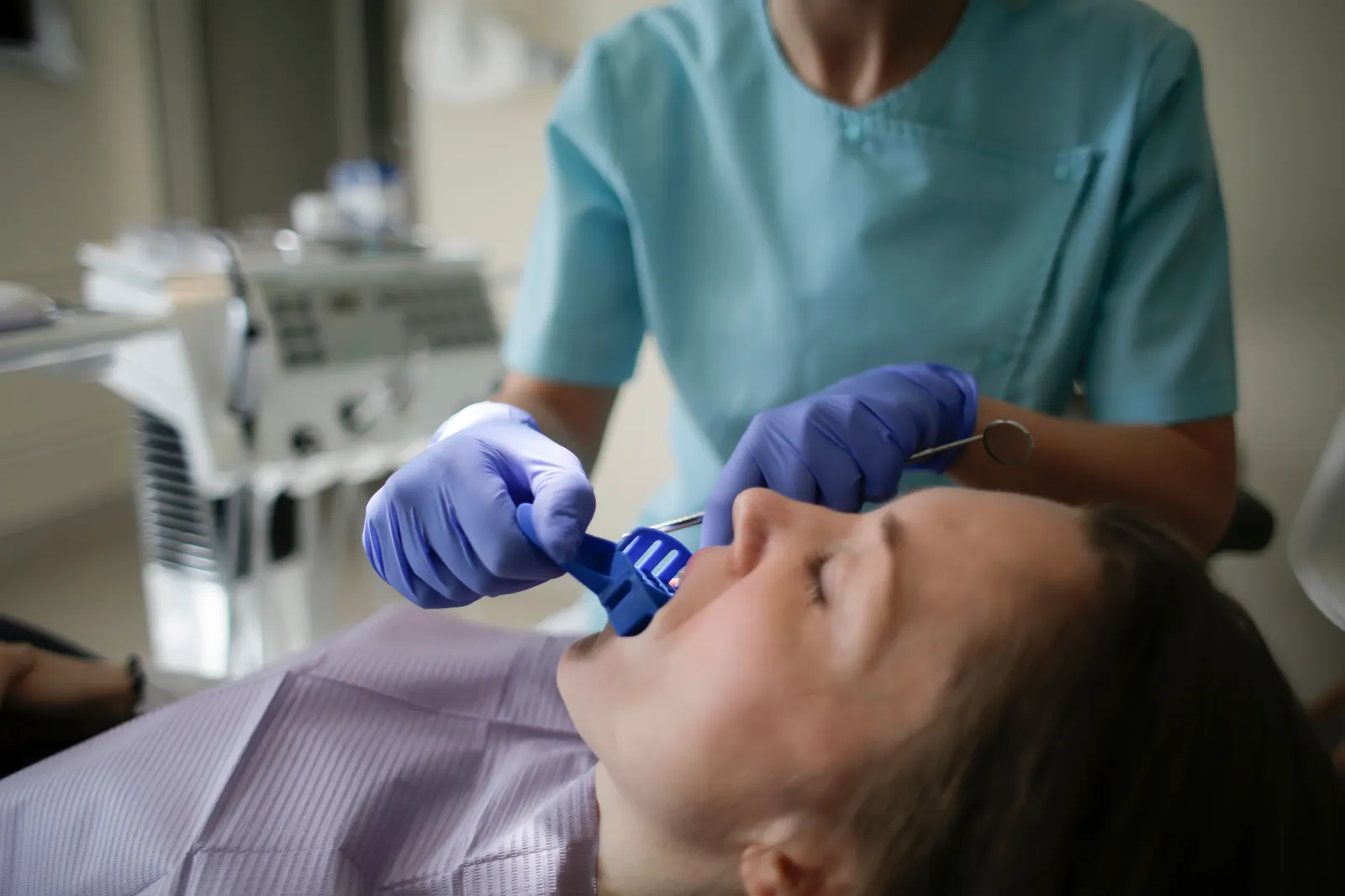
- Digital scan or impression — for treatment simulation in software (ClinCheck for Invisalign, similar for fixed braces).
- Treatment options discussion — what is feasible, what is realistic, what each option costs.
- Written plan with consent — duration, technique, expected outcome, retention plan.
Retention: not optional
Whatever the treatment, retention is essentially permanent. The realistic options:
- Fixed wire retainer bonded behind the lower (and sometimes upper) front teeth. Stays in place 24/7. The most reliable form of retention.
- Removable Vivera or Essix retainers worn nightly indefinitely. Loss or non-compliance leads to relapse.
Without retention, teeth tend to relapse to their original positions over years. Retention is part of the treatment, not an optional add-on.
For UK patients considering Istanbul orthodontic treatment
Adult Invisalign is reasonably suited to UK-Istanbul split care. Initial consultation and digital scan in Istanbul, trays manufactured and shipped, video check-ins every 6 weeks, in-person review at 6 and 12 months. Suited for most aligner cases of mild to moderate complexity. Not suited to fixed brace cases requiring monthly in-person adjustments — those are better done locally.
Pricing for the Invisalign tier set is on the packages page; the entry tier covers most cases. Children’s orthodontics is best done locally on NHS where eligible.
Frequently asked questions
Am I too old for orthodontic treatment?
No — there is no upper age limit. Adults of all ages have orthodontic treatment for functional, hygienic, and aesthetic reasons. The factors that matter are bone health, gum health, and remaining tooth structure — not age per se. Patients in their 70s have successful orthodontic treatment when those criteria are met.
How much do adult braces cost in the UK vs Istanbul?
UK private adult orthodontics runs £2,500–£5,500 depending on case complexity and the specific system. Istanbul pricing for the equivalent tier is on the packages page; cost difference reflects fixed UK overheads. NHS adult orthodontics is available only for severe medical cases (IOTN 4–5).
How long does adult orthodontic treatment take?
Mild cases with clear aligners: 6 months. Moderate cases: 9–14 months. Complex cases: 12–24 months. Surgical-orthodontic combined cases: 2–3 years. The factors that affect duration are case complexity, choice of technique, and patient compliance with appliance wear.
Will my teeth shift back after orthodontic treatment?
Without retention — yes, gradually over years. With proper retention (fixed wire bonded behind front teeth or nightly removable retainer) — no. Retention is essentially permanent. Patients who skip retention typically see noticeable relapse within 5–10 years.