Adult Orthodontics: Braces, Aligners, and What Actually Works for UK Patients
Adult orthodontics has changed more in the past decade than the previous fifty years combined. Clear aligners, accelerated protocols, and refined fixed brace systems mean the choice for UK adults is no longer just “metal or nothing”. Here is the practical clinical picture for the four most common adult orthodontic options.
Why adults are getting braces now
The British Orthodontic Society reports that adult orthodontic cases have grown roughly 40% since 2018, driven mainly by clear aligner availability and the realisation that minor crowding has health implications beyond aesthetics. Crowded teeth are harder to clean, more prone to gum disease, and more susceptible to wear at the contact points. The aesthetic motivation is real — most patients also cite functional and hygiene reasons.
The four main adult options
Clear aligners (Invisalign and equivalents)
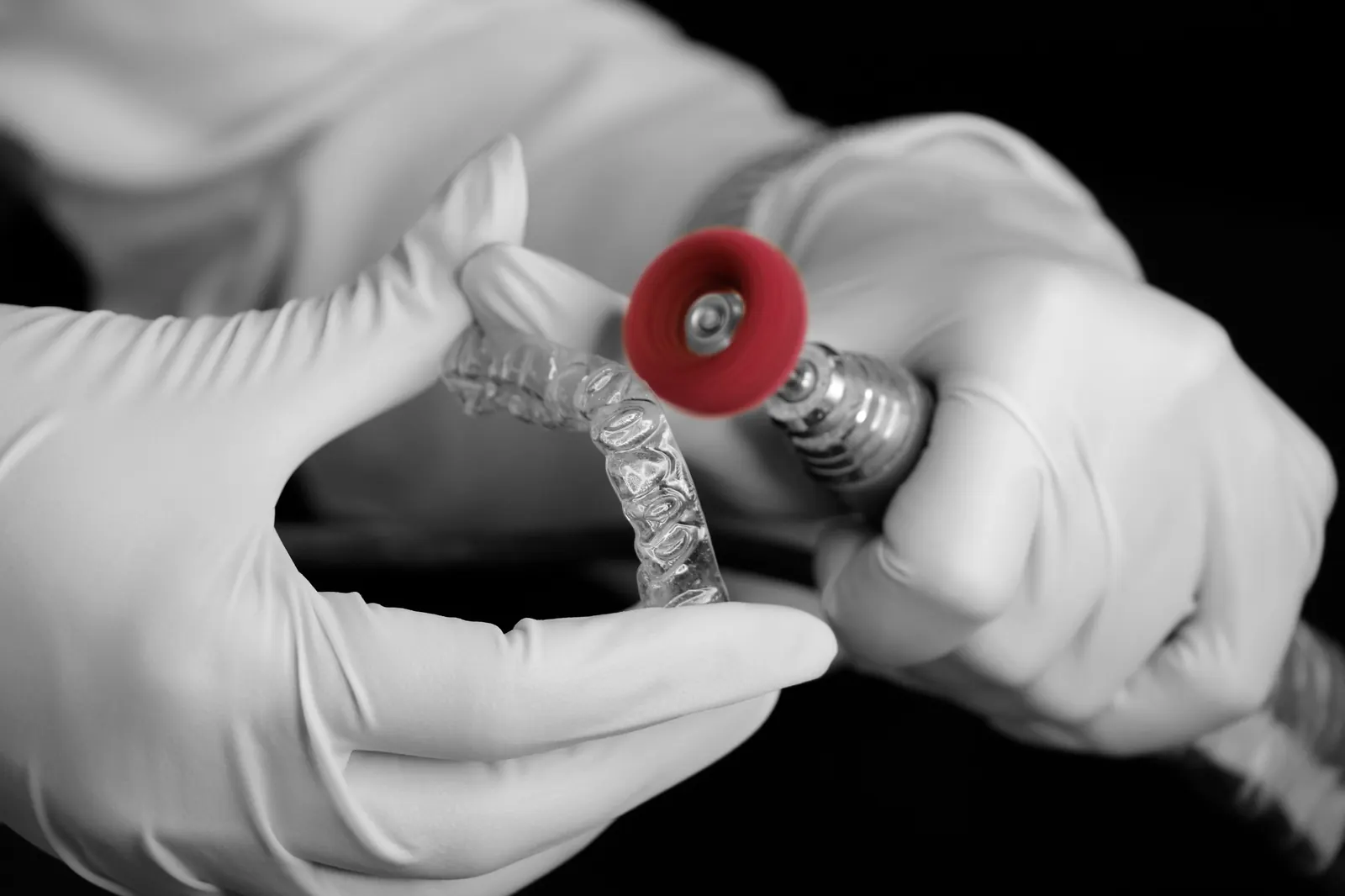
A series of clear plastic trays, each worn for 7–14 days, gradually moving teeth to a planned final position. Suited for mild to moderate crowding, gap closure, and rotation correction. Treatment time 6–18 months for most cases. Removable for eating and brushing — wear time of 22 hours daily is required for predictable results. The technology has improved substantially since 2018; current case applicability extends to many cases that previously required fixed braces.
Fixed ceramic braces
Tooth-coloured brackets bonded to the teeth, with thin metal wires. Less visible than metal braces, slightly more visible than aligners. Used for cases that aligners cannot predictably handle — severe rotations, significant vertical movement, complex occlusal corrections. Treatment time typically 12–24 months.
Lingual braces
Fixed braces on the inner (tongue-side) of the teeth. Invisible from the front. Best aesthetic option for adults who cannot have visible appliances for professional reasons. More expensive than other options. Initial speech adjustment is real (1–2 weeks of lisp). Suited for moderate to complex cases.
Traditional metal braces
Most cost-effective option. Visible. Suited for any case from simple to complex. Adolescent NHS provision is mostly metal. Adult preference is usually for aligners or ceramic, but metal remains clinically viable.
How to know which is right for your case
The realistic answer comes from a clinical examination, not from a website self-test. Three diagnostic inputs decide:
- Severity of malocclusion: measured by orthodontist using indices like the IOTN (Index of Orthodontic Treatment Need). Mild cases: aligners work. Moderate: aligners or ceramic braces. Severe: fixed braces, sometimes with extractions or jaw surgery.
- Specific tooth movements needed: aligners are excellent for tipping and rotating teeth, less reliable for moving roots through bone. Cases requiring significant root movement (severely tipped teeth, high or low canines) often need fixed braces.
- Patient compliance: aligners only work if worn 22 hours daily. Patients who cannot consistently wear them are better served by fixed braces.
Treatment time and what affects it
Most adult cases run 12–18 months. Faster timelines exist (6 months for limited correction, accelerated protocols with adjuncts) but they apply to specific case profiles, not universally. Slower timelines (24+ months) apply to severe cases, jaw surgery cases, or where compliance has slipped.
What happens after braces come off
Retention is permanent or near-permanent. The realistic options are:
- Fixed wire retainer bonded behind the lower (and sometimes upper) front teeth. Stays in place 24/7. The most reliable form of retention.
- Removable Vivera or Essix retainers worn nightly indefinitely. Loss or non-compliance leads to relapse.
The realistic conversation: orthodontic results that are not retained tend to relapse within 5–10 years. Retention is part of the treatment, not optional.
For UK patients considering Istanbul treatment
Adult orthodontics is reasonably well suited to UK-Istanbul split care. The clinical model: initial assessment and digital scans in Istanbul, aligner trays manufactured and shipped, video check-ins every 6 weeks, in-person review at 6 and 12 months. Suited for most aligner cases. Not suited for fixed brace cases requiring monthly in-person adjustments — those should be done locally. Pricing for the full Invisalign tier set is on the packages page; the entry tier covers most cases of mild to moderate complexity. Our Invisalign-specific guide covers the aligner pathway in more detail.
Frequently asked questions
Are clear aligners as effective as braces?
For most adult cases of mild to moderate complexity — yes. The published outcome data shows comparable results to fixed braces in those case categories. For severe rotations, large vertical movements, or cases requiring extractions and significant space management, fixed braces remain more predictable.
How much does Invisalign cost in the UK vs Istanbul?
UK private Invisalign treatment runs £2500–£5500 depending on case complexity and the specific Invisalign package (Lite, Moderate, Comprehensive). Istanbul pricing for the equivalent treatment tier is confirmed in the written treatment plan and is on the packages page; the cost difference reflects fixed UK overheads, not lower clinical standards.
Will I have a lisp with aligners or lingual braces?
Aligners cause minor speech adjustment for 2–5 days that resolves spontaneously. Lingual braces have a more pronounced initial lisp lasting 1–2 weeks, also resolving as the tongue adapts. If your work involves public speaking, lingual braces should be timed accordingly.
Can I get NHS adult orthodontics?
Adult NHS orthodontics is available only in cases of severe functional or surgical need (severe malocclusion with IOTN 4 or 5, significant cranial deformity, jaw surgery cases). Cosmetic adult orthodontics is private only. Most adult clear-aligner cases are private regardless of country.