
Painless Root Canal Treatment: How Modern Endodontics Changed the Reputation
Root canal treatment has been associated with pain in cultural memory for decades — “I’d rather have a root canal” is the reference for any unpleasant task. The reputation is increasingly outdated. Modern endodontic technique, anaesthesia, and instrumentation have changed the patient experience substantially. Here is what actually happens in 2026.
Why the pain reputation persists
Three contributing factors:
- Older patients remember root canal treatments from the 1970s–1990s when techniques were genuinely more uncomfortable.
- The procedure is associated with severe pre-treatment pain (most patients seeking root canal have been in significant discomfort for days), which becomes conflated with the procedure itself.
- Cultural references and jokes perpetuate the reputation independent of current clinical reality.
Modern endodontic treatment is, for most patients, no more uncomfortable than a routine filling. The change is real; the perception lags.
What changed
Improved local anaesthesia
Modern anaesthetic agents (articaine, lidocaine with epinephrine), supplementary techniques (intra-osseous, intra-pulpal), and refined injection methods achieve reliable numbness in nearly all cases. The “the dentist couldn’t get me numb” experience has become uncommon with current technique.
Rotary nickel-titanium instrumentation
Older root canal treatment used hand files of stainless steel. Modern rotary nickel-titanium files cut the canal smoothly and quickly, reducing procedure time from 90+ minutes to 30–60 minutes for many cases. Less time means less patient discomfort during the procedure.
Operating microscope
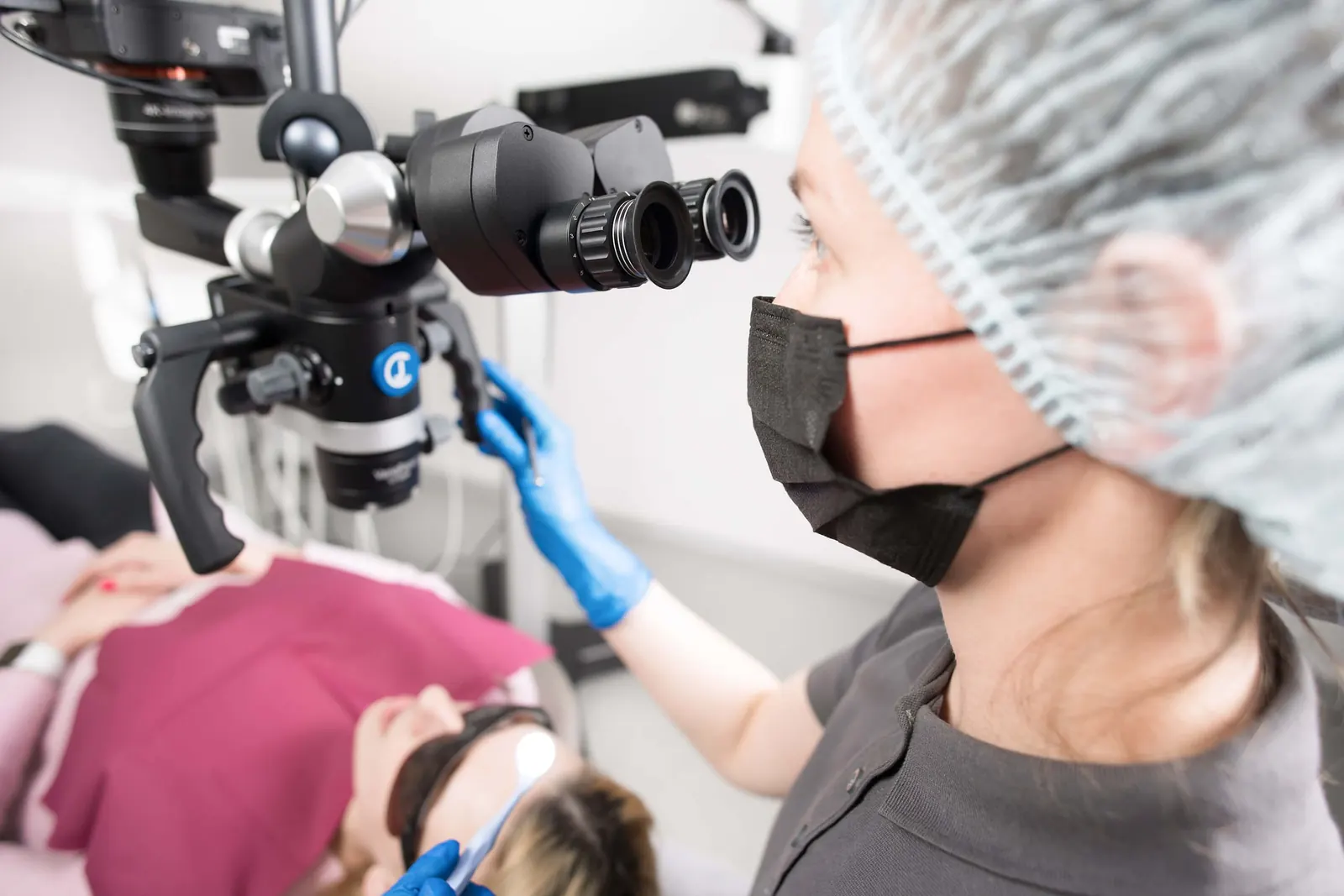
The microscope has become standard for endodontic work. Better visualisation of canal anatomy means more thorough cleaning, fewer missed canals, and better outcomes — translating to less post-operative discomfort and lower retreatment risk.
Improved disinfection
Modern protocols using sodium hypochlorite irrigation with ultrasonic activation achieve more thorough bacterial reduction than older techniques. Better disinfection means lower rates of post-operative inflammation and pain.
Single-visit treatment
Many cases that previously required 2–3 appointments are now completed in a single visit, reducing the cumulative discomfort experienced by the patient.
What patients actually experience
The realistic patient experience in 2026:
- Before treatment: often significant pain that drove the patient to seek care. The pain is from the inflamed or infected pulp, not from the upcoming treatment.
- Local anaesthesia: a brief sting at injection (less than 30 seconds), then numbness develops over 2–5 minutes.
- During the procedure: patients feel pressure and vibration but not pain. The mouth stays open with a rubber dam in place; some report this is the most uncomfortable aspect.
- Immediately after: the anaesthetic wears off over 2–4 hours; mild ache typically begins as it does. Pre-emptive analgesia (paracetamol + ibuprofen) before the anaesthetic wears off is the standard advice.
- Days 2–5: mild to moderate ache that responds to OTC analgesia. The tooth may feel tender to bite for 1–2 weeks.
- Day 7+: most patients are comfortable; the tooth functions normally though may still be slightly sensitive to bite for a few weeks.
What can still be uncomfortable
Genuine remaining discomfort sources:
- Pre-treatment pain not fully controlled before procedure: a tooth in acute inflammation can be hard to anaesthetise fully; supplementary anaesthetic techniques are needed.
- Long appointment time: 90+ minute appointments with the rubber dam in place are physically tiring; jaw fatigue is common in long sessions.
- Anxiety: patient psychological discomfort is real even when physical discomfort is well-controlled. Sedation options exist for anxious patients.
- Cases with extensive infection or complex anatomy: harder cases take longer and have higher post-operative discomfort rates.
What helps
For patients who are anxious about root canal treatment, the practical options:
- Pre-emptive analgesia: ibuprofen 400 mg taken 1 hour before the appointment reduces post-procedure inflammation.
- Inhalation sedation (nitrous oxide): takes the edge off anxiety, fully reversible within minutes of stopping.
- Oral conscious sedation: an anti-anxiety tablet taken before the appointment for moderate anxiety.
- IV sedation: for severe anxiety, full conscious sedation administered by an anaesthetist or appropriately trained dentist.
- Specialist endodontist referral: for complex cases or anxious patients, treatment by a specialist with daily volume in this work has higher success and patient comfort rates.
The honest comparison with extraction
Patients sometimes consider extraction as the “simpler” option to avoid root canal discomfort. The realistic comparison:
- Extraction is also done under local anaesthesia, also generally not painful during.
- Post-extraction recovery includes 5–7 days of moderate discomfort plus 6–12 months of bone healing before implant placement.
- Implant replacement is a separate procedure with its own recovery and cost.
- The cumulative cost and timeline of extract-implant exceeds root canal in most cases where root canal is feasible.
Choosing extraction to avoid root canal pain is rarely the right calculation. The decision should be based on whether the tooth is salvageable, not on which procedure sounds less unpleasant.
For UK patients
NHS dental anaesthesia is the same standard as private — there is no differential in pain control between NHS and private root canal treatment. The differences are in appointment length, complexity of cases handled in-house vs referred, and waiting times. Our broader root canal guide covers the procedure in clinical detail.
Frequently asked questions
Will I feel pain during the root canal?
No — the procedure is performed under local anaesthesia. Most patients describe sensations of pressure and vibration but no pain. The ‘painful root canal’ reputation comes from earlier eras of dentistry; modern technique reliably achieves comfortable treatment for the vast majority of patients.
How bad is the pain after a root canal?
Mild to moderate ache for 2–5 days, controlled by paracetamol-ibuprofen rotation. The tooth may feel tender to bite for 1–2 weeks. Most patients are comfortable enough to return to normal activity the next day. Severe or worsening pain after day 3 is unusual and warrants review.
Can I have IV sedation for a root canal?
Yes — IV sedation is available at private clinics with the appropriate equipment and training. NHS provision is more limited, generally restricted to severely anxious patients or those with specific medical needs. Inhalation sedation (nitrous oxide) is more widely available and adequate for most anxious patients.
Is extraction less painful than root canal?
Not really, in modern practice. Both are performed under local anaesthesia. Extraction has 5–7 days of moderate post-operative discomfort and a longer overall timeline if implant replacement follows (6–12 months bone healing plus implant procedure). Choosing extraction to avoid root canal pain is rarely the right calculation; the decision should be based on whether the tooth is salvageable.