No-Prep Veneers in Turkey: Ultra-Thin, No Shaving. A UK Patient’s Guide
“No drill, no shave, no numbing.” That is the sales line for no-prep (also called prepless or non-prep) and ultra-thin veneers — “veneers without shaving your teeth” — and it is partially true. Done correctly, the technique spares every millimetre of enamel and leaves a result indistinguishable from conventional veneers. Done incorrectly — or applied to the wrong patient — it fails. This guide explains what no-prep veneers actually are, who is a genuine candidate, how the technique is executed in an Istanbul specialist practice, and how the cost compares with traditional and UK pricing.
How GC Clinic decides. Our rule is simple: we do not remove healthy enamel without a reason. If your teeth qualify for no-prep — small, short or spaced front teeth that need a little volume — no-prep takes priority. If they don’t (protrusive, crowded or darker teeth), a minimal-prep e.max veneer at 0.3–0.5 mm gives the natural result, and we say so. Either way: photos and a scan first, a composite mock-up you wear before anything is bonded, ultra-thin Ivoclar e.max Press designed to your tooth — never a prefabricated shell — and the brand and lot number written into your file.
Porcelain veneers at GC Clinic → · Minimally invasive dentistry → · Do they shave your teeth in Turkey? →
What are no-prep veneers?
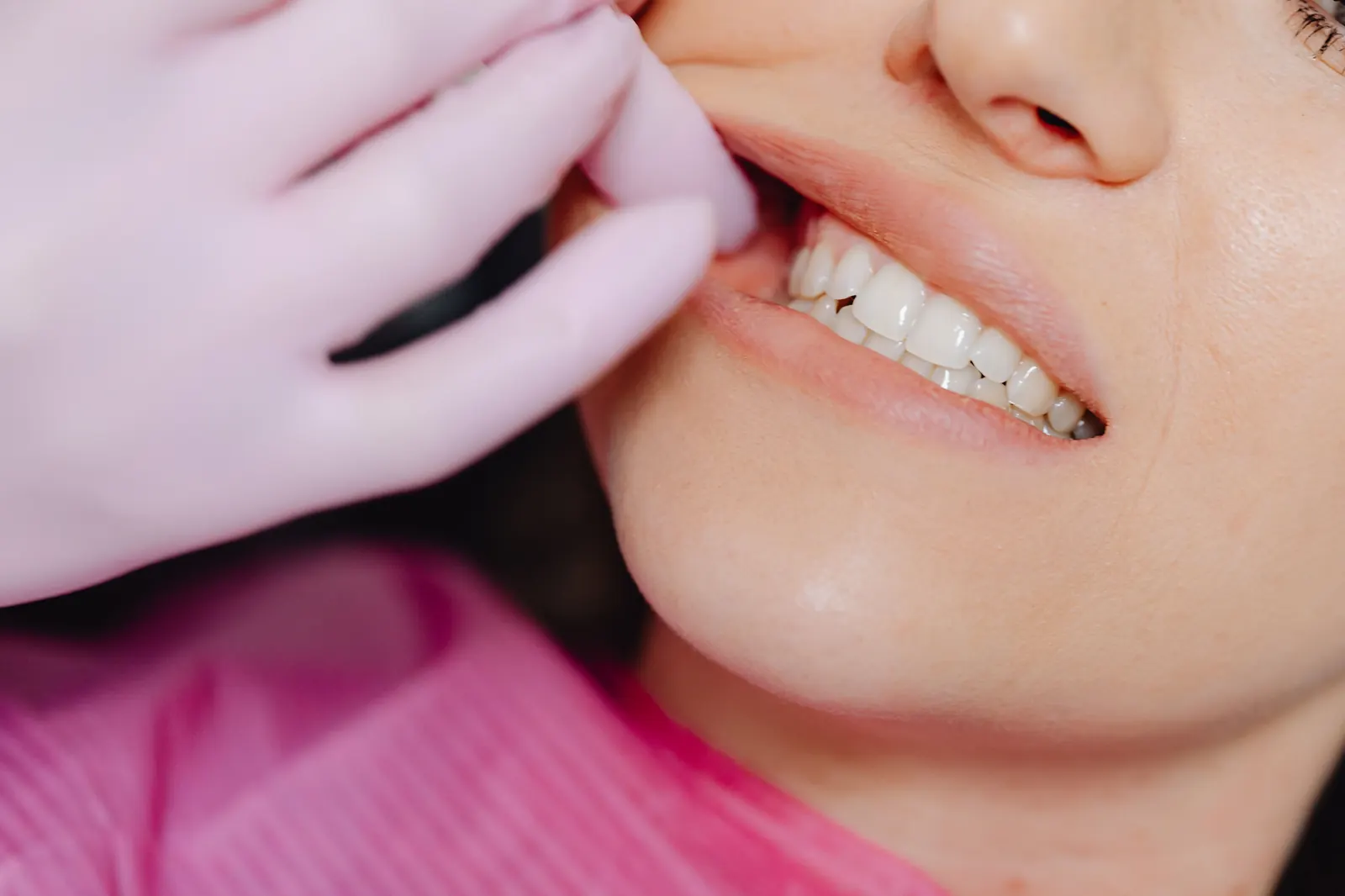
A no-prep veneer is a thin shell of porcelain — typically 0.2 to 0.5 mm thick — bonded to the front of a tooth with no drilling or shaping of the tooth first. The Lumineers brand (Cerinate porcelain, produced in California) is the best-known example in the UK market, but by 2026 several materials are available with comparable properties, including pressed lithium-disilicate (e.max Press at ultra-thin thickness), layered feldspathic porcelain on refractory die, and injectable composite alternatives.
The defining features of a true no-prep veneer:
- No enamel removal. Zero. The tooth surface is cleaned and lightly etched with phosphoric acid to create micromechanical retention, but no bur touches the tooth.
- Reversibility. Because no tooth structure is lost, the veneers can theoretically be removed in the future and the tooth returns close to original condition.
- Thin material — but thin requires skill. Ultra-thin porcelain is fragile during fitting; laboratory and chairside technique is more demanding than for a thicker veneer.
- Additive rather than subtractive. Because no tooth is removed, the final contour is slightly thicker than the original tooth. This is the central limitation of the technique: it adds, it never subtracts.
No-prep veneers vs minimal-prep veneers vs traditional veneers
Three categories, often confused in online content:
- No-prep (0 mm enamel removal): Lumineers, DURAthin, e.max Press ultra-thin (0.2–0.3 mm). No drilling, fully reversible. Best when the existing teeth are small, aligned, and not already worn.
- Minimal-prep (0.3–0.5 mm enamel removal): conventional contemporary cosmetic dentistry. Slight reduction on the facial surface only; enamel bond fully preserved. This is what the modern old money smile uses.
- Traditional (0.5–1.0 mm enamel removal): the technique taught in older textbooks. More preparation, more room for the ceramicist to work, stronger aesthetic control but less tooth remaining. Still used where the teeth are large and protrusive and need to be reduced.
A fourth, distinct category is crown-type preparation — where the tooth is reduced by 1.5–2.0 mm on all surfaces and a full crown is placed. This is what “Turkey Teeth” usually means when the procedure went wrong: veneers were promised, but crown-level reduction was carried out because the clinic prefers the technique. See our separate guide to veneer removal for how to tell the difference.
Who is a candidate for no-prep veneers — and who is not?
This is the most important part of the conversation. No-prep veneers are excellent for the right patient and a bad choice for the wrong patient. You are likely a good candidate if:
- Your existing teeth are small, short, or undersized for your face. No-prep adds thickness; if your teeth are already too prominent, no-prep makes the problem worse.
- Your existing teeth are well aligned or only minimally crooked. No-prep cannot correct significant crowding or rotation.
- You have healthy enamel (not eroded, not over-polished, not heavily filled on the facial surface). Bond strength depends on intact enamel.
- You want a subtle, reversible improvement rather than a dramatic transformation.
- You have open spaces or gaps between teeth. No-prep fills these well.
You are likely not a good candidate if:
- Your existing teeth are already prominent or protrusive. Adding thickness will make them more so.
- You have significant crowding or rotation. Get orthodontics (Invisalign or braces) first, then consider veneers afterwards.
- You want a dramatic change — whiter, squarer, more Hollywood. No-prep is additive; dramatic changes need some subtractive room.
- You have enamel erosion (from acid reflux, bulimia, GLP-1 medication — see our Ozempic teeth guide). Bond reliability is compromised.
- You grind your teeth heavily at night without a guard. Thin porcelain chips under parafunctional load.
Do no-prep veneers look natural?
Done by a dentist and laboratory experienced in the technique: yes, absolutely. Done badly: no — they look thick, opaque, and “stuck on”, because the porcelain is bulking forward over the tooth rather than taking its place.
Three technical factors determine whether no-prep looks natural:
- Emergence profile. How the veneer meets the gum. A well-made no-prep veneer has a feather-thin margin that disappears at the gum line. A poorly made one has a visible step that catches light and shows up on photographs.
- Material thickness control. 0.3 mm ultra-thin porcelain can be made highly translucent. 0.7 mm “no-prep” porcelain looks chunky and opaque. The laboratory has to be able to produce the thin version.
- Lingual contour. The back of the veneer needs to match the original tooth contour precisely. If it adds bulk on the tongue side, speech changes and the patient feels the veneers against their tongue.
No-prep veneers in Istanbul: how we do it
The technique at GC Clinic for no-prep veneers follows six steps over 5–7 days:
- Intraoral scan and photographs. No wax-up on a model — all planning is digital. We scan your existing teeth and design the veneers additively, adding 0.2–0.4 mm of contour where needed.
- Digital Smile Design mock-up. You see a simulation of the planned result on your face photograph. Any shade or contour adjustments happen here, before anything physical is made.
- Composite trial smile. Because no-prep means no enamel is removed, we can place a temporary composite mock-up directly on your teeth without numbing. You wear it for 24 hours, photograph it in daylight, and approve.
- Laboratory production. e.max Press pressed to 0.3–0.5 mm thickness, then stained and glazed by hand. Turnaround 3–4 days.
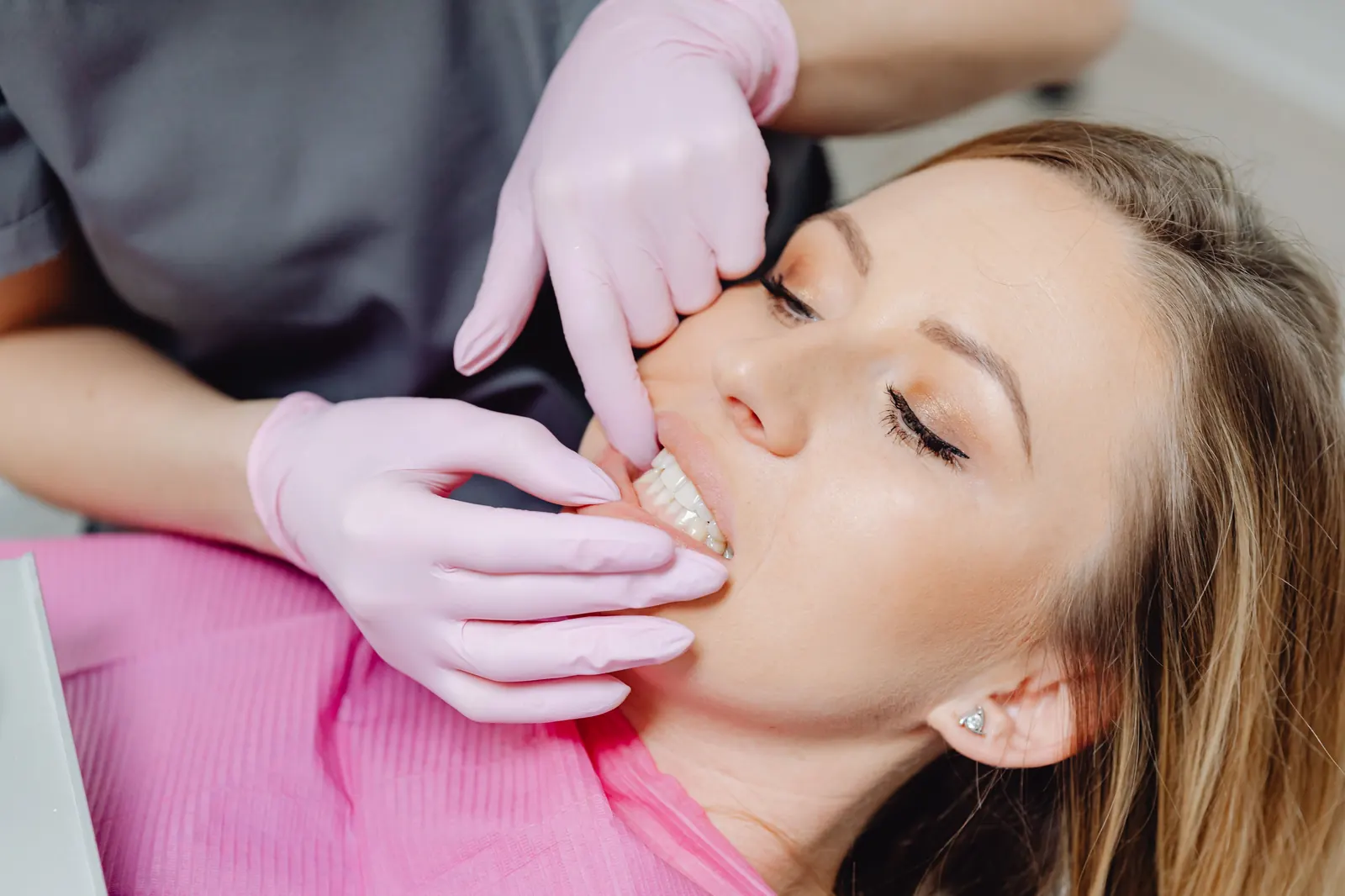
- Trial fit dry. Veneers are placed without adhesive first, checked for fit, shade and contour. Any adjustments made chairside with fine diamond burs — on the veneer, not the tooth.
- Bonding. Phosphoric acid etch on the tooth (30 seconds), dental bonding agent, and dual-cure resin cement. Each veneer placed individually, excess cement removed, light cured. Occlusion adjusted. Polished.
The whole process is 5–7 days in Istanbul. Compared with a UK no-prep veneer journey (typically 6–8 weeks with 3–4 appointments across different labs), the compressed timeline is the reason patients travel.
How much do no-prep veneers cost in Turkey?
The pricing is positioned within the same T1 Smile Design package structure we use for traditional veneers — but typically at the lower-mid tier because the chair time is shorter and no preparation is involved:
- Standard tier (no-prep variant): £2,500–£3,400 for 8 ultra-thin e.max Press veneers. Basic DSD, intraoral scan, digital mock-up, 4★ hotel, Standard transfer.
- Premium tier (no-prep variant): £3,800–£4,400 — layered porcelain by senior ceramicist, full DSD protocol with trial smile, 5★ accommodation upgrade, Premium transfer (fast-track).
- VIP tier (no-prep variant): £5,800–£6,250 — premium layered porcelain with gum contouring option, full test-drive protocol, ultra-luxury 5★ stay, VIP transfer.
UK private prices for equivalent work:
- Lumineers (brand-name no-prep): £7,000–£14,000 for 8 teeth at a UK-certified Lumineers provider.
- Generic no-prep e.max: £5,500–£11,000 for 8 teeth at a UK cosmetic practice.
Full pricing by tier and package is on the Packages page.
For a fixed, itemised quote on your own teeth, see porcelain veneers at GC Clinic — the written plan comes before you book a flight.
How long do no-prep veneers last?
Well-bonded e.max Press no-prep veneers have published survival data comparable to minimal-prep veneers: 90%+ at 10 years, provided the occlusion is managed, the patient wears a night guard if they grind, and hygiene is maintained. In practice, clinical failures are more often due to bond failure (detachment) than material fracture, because the enamel-to-porcelain bond is the weak link.
Our written warranty is 5 years on the veneers themselves. Composite trial-smile work is covered for 2 years. Ageing-related polishing or adjustment within the warranty period is included. If the veneers detach without trauma in the warranty period, we replace them and cover your return flight.
No-prep or minimal-prep: how do I choose?
If the real question is whether you need a veneer at all, or a crown, start with veneers or crowns: how to decide; the rest of this section assumes a veneer is the right restoration.
In reality, the dentist should choose for you based on the diagnostic. If your teeth are small, aligned and enamel-rich: no-prep. If your teeth are prominent, slightly crooked, or worn: minimal-prep. If your teeth are large and protrusive: traditional veneers. Picking the technique before the diagnostic is a common source of cosmetic-dentistry failure.
Our recommendation at the end of a photo assessment is always specific. “No-prep suits your case because [reason].” or “No-prep would add too much thickness given your lip posture — minimal-prep is the right route.” We explain the reasoning. If you prefer another approach after hearing it, that is a conversation; but the default is to advise what the teeth actually need.