Scale and Polish: What It Actually Does, How Often You Need It
Scale and polish — known professionally as supragingival debridement — removes the calculus (hardened plaque) and stains that toothbrushing alone cannot reach. The right interval depends on individual periodontal risk, not a generic six-month rule. Here is the practical guide for UK patients.
What scale and polish actually involves
The procedure has three components:
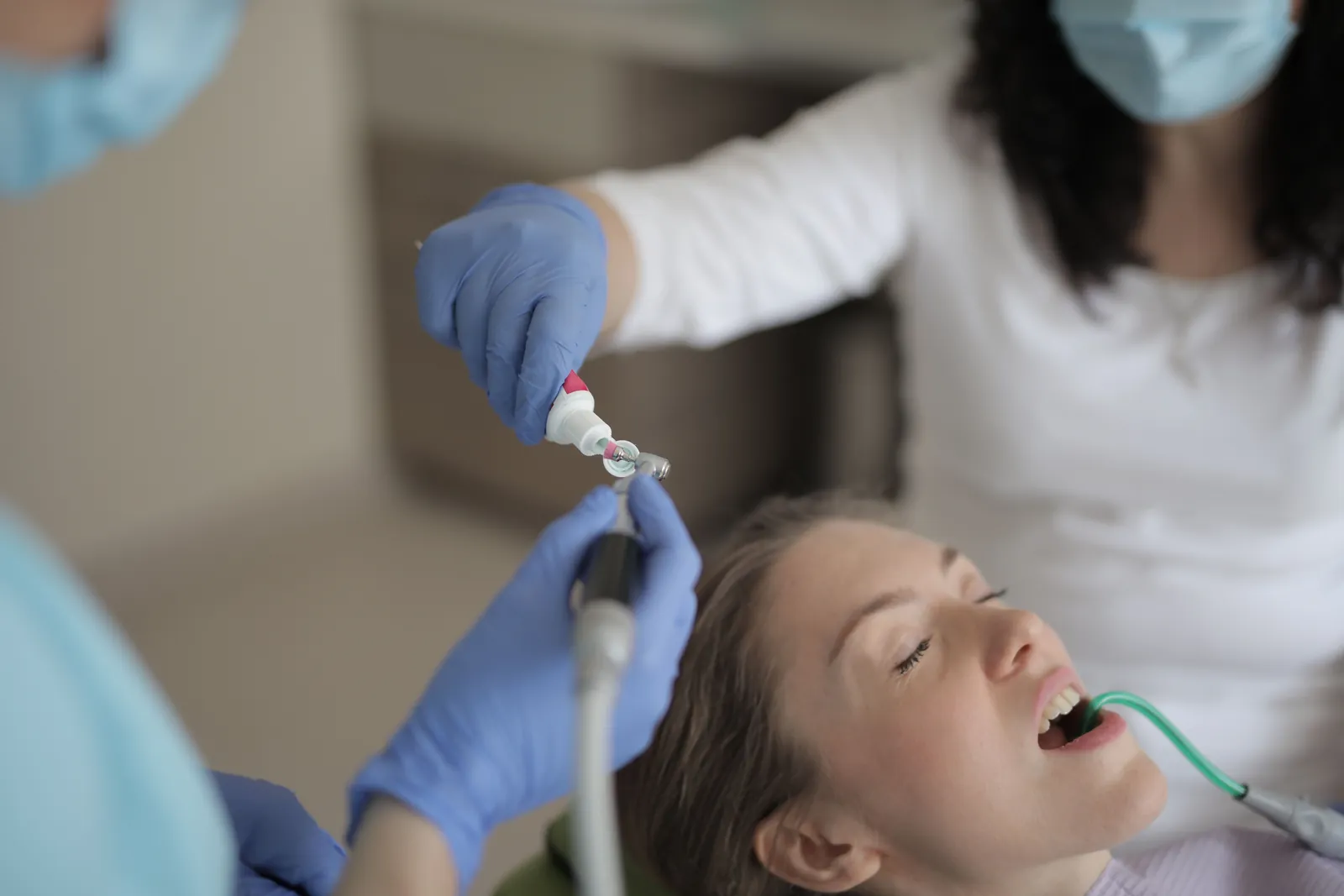
- Ultrasonic scaling: a high-frequency vibrating tip combined with water spray fragments calculus deposits and washes them away. The same instrument can be used by hand or with a fine ultrasonic tip in deeper areas.
- Hand scaling: for areas the ultrasonic cannot reach precisely, particularly between teeth and at the gum margin.
- Polishing: a rotating rubber cup with mildly abrasive paste removes external staining and smooths the tooth surface so plaque has less to grip onto. Air polishing (sodium bicarbonate spray) is increasingly used as an alternative.
The whole appointment runs 30–45 minutes for an adult with average calculus build-up. Heavy build-up cases may need 60 minutes or split across two appointments.
The difference between scale-and-polish and “deep cleaning”
Confusing terminology causes misunderstandings:
- Scale and polish removes deposits ABOVE the gum line. Suitable for healthy gums or mild gingivitis. NHS Band 1 in routine cases. No anaesthetic typically needed.
- Scaling and root planing (sometimes called “deep cleaning”): removes deposits BELOW the gum line, into periodontal pockets. Required when there is established periodontitis with pockets >4 mm. Performed under local anaesthesia. NHS Band 2 or private.
If your dentist or hygienist recommends “deep cleaning”, they should explain whether it is the routine scale-and-polish or the more involved sub-gingival treatment, and why.
How often is “right”
The British Society of Periodontology and the European Federation of Periodontology recommend interval based on individual risk:
- Low-risk patients (no gingivitis, no caries, good oral hygiene, no risk factors): every 12 months.
- Moderate-risk patients (mild gingivitis, occasional caries, moderate oral hygiene): every 6 months.
- Higher-risk patients (gingivitis history, periodontitis, smokers, diabetics, immunocompromised): every 3–4 months.
- Active periodontitis on maintenance: every 3 months minimum.
The “every six months” default is appropriate for moderate risk, which fits most UK adults. It is not a clinical mandate for patients who genuinely have no risk factors.
Why frequent scale-and-polish matters more than home brushing alone
Toothbrushing reaches roughly 60% of tooth surfaces effectively. Daily flossing or interdental brushing improves this to 80–85%. The remaining 15–20% — particularly tight contact areas, around the back molars, and below the gum margin — accumulates plaque that mineralises into calculus within 24–72 hours. Calculus cannot be removed by brushing or flossing once it has hardened. Only mechanical professional removal addresses it.
Without periodic professional cleaning, calculus builds gradually, creating a rough surface that bacteria adhere to even more easily. The cycle of inflammation, gingivitis, and eventual periodontitis is the predictable consequence.
Scale-and-polish for stain removal
Most patients seeking scale-and-polish cite stain (coffee, tea, red wine, smoking) as a primary motivation. The procedure removes external surface stain effectively. It does not remove deeper staining (intrinsic stains within the tooth structure) — for those, whitening procedures are needed.
For heavy stain accumulation, air polishing with sodium bicarbonate or glycine powder is more effective than rubber-cup polish. Available at most modern UK and Istanbul hygiene clinics.
What to expect during and after
- Mild gum bleeding during scaling is common — particularly if there is existing gingivitis. The bleeding stops within hours.
- Some sensitivity to cold for 24–72 hours afterwards, particularly if there was pre-existing gum recession.
- The teeth feel cleaner and slightly slippery for the first day. This is the absence of plaque biofilm; it returns within hours of normal eating.
- If sensitivity persists beyond a few days, desensitising toothpaste (Sensodyne or similar) and a fluoride mouthwash can help.
NHS provision and cost
NHS Band 1 covers a routine scale and polish (around £25.80 in England, less in Wales/Northern Ireland) when clinically necessary. Some NHS dentists provide additional scale-and-polish only on request rather than as routine; this is at their clinical discretion.
Private hygienist appointments in the UK run £60–£120 depending on location and clinic. Many UK patients see the NHS dentist annually and a private hygienist for the additional 6-month check-up.
For UK patients combining hygiene with travel
Scale and polish is the kind of preventive maintenance that does not justify a dental tourism trip on its own — the cost difference is minimal compared to flights and accommodation. Where it does fit: as part of a larger Istanbul treatment plan (a deep clean and stain removal alongside cosmetic or restorative work). Most patients having veneers, implants, or smile design in Istanbul include a hygiene appointment as part of the package.
Frequently asked questions
How often do I really need a scale and polish?
It depends on individual risk factors, not a generic rule. Low-risk patients can stretch to 12 months; moderate risk benefits from 6 months; high-risk patients (smokers, diabetics, periodontitis history) need 3–4 months. Your dentist sets the recall interval based on your specific assessment, not a default policy.
Will my teeth be whiter after a scale and polish?
External stains (coffee, tea, red wine, tobacco) are removed effectively. The underlying tooth colour is unchanged. For deeper stain removal or definitive whitening, professional whitening treatment is the appropriate route. Scale and polish is preventive, not cosmetic.
Is scale and polish covered by NHS?
Yes — NHS Band 1 covers a routine scale and polish when clinically necessary. The interval is at the dentist’s discretion based on your periodontal risk. Some patients prefer private hygienist appointments alongside their NHS check-ups for more frequent or longer cleaning sessions.
Will scaling damage my teeth or gums?
No, when performed correctly. Modern ultrasonic scaling uses very fine vibration that fragments calculus without damaging enamel. Some patients with thin enamel or exposed root surfaces experience temporary sensitivity, which is managed with desensitising toothpaste. Long-term, regular scaling protects rather than damages — the alternative is calculus accumulation that drives periodontal disease.