
Cracked Tooth Syndrome: Diagnosis, Treatment, and Why It Is So Hard to Catch Early
A cracked tooth is one of the harder things to diagnose in dentistry. The pain is intermittent, the X-ray often shows nothing, and the patient comes in with a vague history of “sometimes it hurts when I bite”. Catching it early matters because the treatment ladder runs from simple to complex very quickly once a crack propagates. Here is the practical clinical picture for UK patients.
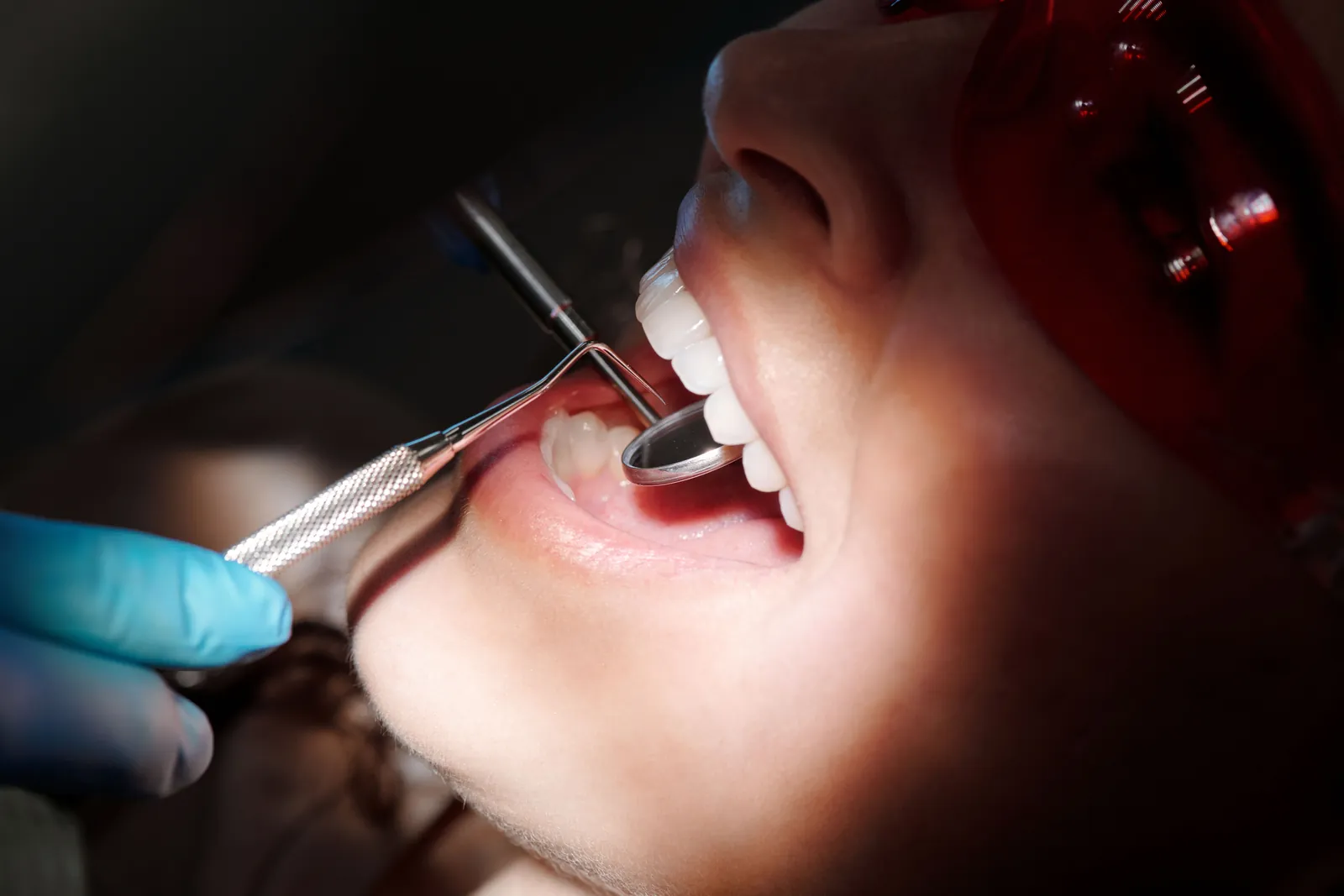
What cracked tooth syndrome is
The term covers any tooth with a fracture that has not fully separated the tooth into pieces. The crack might run through enamel only (cosmetic concern, no symptoms), through enamel and dentine (the classic cracked tooth syndrome — sharp pain on biting that comes and goes), or down into the pulp (severe ongoing pain). The behaviour and treatment depend on how far the crack extends.
Why it is so hard to catch early
Three reasons:
- The crack is often microscopic and invisible to the naked eye.
- X-rays rarely show vertical cracks until they are advanced — X-rays catch horizontal fractures, not vertical ones running with the long axis of the tooth.
- The pain is intermittent — sharp on biting in a specific way, then absent. Patients learn to chew on the other side and the symptom subsides for weeks at a time, only to return when something triggers it.
The classic patient presentation
- Sharp, brief pain on biting, especially on releasing the bite.
- Sensitivity to cold, sometimes to sweet.
- Pain that cannot be reliably reproduced by the dentist tapping or pressing on the tooth.
- X-ray shows no obvious cause.
- Patient often points to a tooth and says “I’m not sure, but I think it’s this one — sometimes.”
The diagnostic workflow
Modern cracked tooth diagnosis uses several tools:
- Cracked-tooth bite test: a small wedge (Tooth Slooth) placed on individual cusps. Pain on biting one specific cusp, but not adjacent ones, suggests a crack under that cusp.
- Transillumination: a bright light shone through the tooth from the side. Cracks block light and appear as dark lines.
- Methylene blue dye staining: applied to the tooth, then washed off. Cracks retain the dye and become visible.
- CBCT: useful for detecting cracks that have extended to the root, where they alter the periapical bone pattern.
- Diagnostic crown: when the suspicion is high but proof is incomplete, a temporary crown that splints the tooth often resolves symptoms within 2–3 weeks if the crack is in the crown of the tooth. This is also informative diagnostically.
The treatment ladder
Crack in enamel only
No treatment needed. Patient education and observation. Many adults have small enamel craze lines visible under transillumination — completely benign.
Crack into dentine, no pulp involvement
Indirect onlay or full crown to splint the tooth and prevent crack propagation. Symptoms typically resolve within days of cementation. The earlier this is done, the better the prognosis — a crack left to propagate eventually reaches the pulp.
Crack reaching the pulp
Root canal treatment followed by full crown. The crown must extend over the cusps to splint the tooth. Long-term prognosis depends on how far the crack has propagated apically.
Crack extending to the root
Generally non-restorable. The tooth is extracted and replaced with an implant or bridge. Splinting cannot stop a crack that has reached the root.
Vertical root fracture
The worst category — the crack runs along the long axis of the root from the crown downward. Always non-restorable. Extraction and replacement.
The high-risk patient profiles
- Bruxism patients: the heavy biting forces fracture lower molars over years. Bruxism management is preventive.
- Heavily restored teeth: teeth that have multiple large fillings have less remaining tooth structure to absorb load. The remaining cusps fracture under normal chewing.
- Teeth that have had root canal treatment without subsequent crown: root-treated teeth without full coverage have substantially higher fracture rates. This is the strongest single argument for placing a crown after root canal treatment, even when the tooth feels fine.
- Patients with hard food habits: regular ice chewing, raw nuts, hard sweets, pen-lid biting.
For UK patients considering Istanbul treatment for a cracked tooth
Cracked tooth diagnosis benefits from in-person clinical examination. We see UK patients in two scenarios: a cracked tooth identified by the UK dentist as needing crown work, where the patient prefers Istanbul treatment for cost or specialist preference; or repeated unresolved pain in a specific tooth where the UK dentist has been unable to confirm the diagnosis. For the second scenario, sending CBCT and clinical photographs ahead of any travel is the right first step. Dr. Öztürk reviews the imaging before you book.
Frequently asked questions
How can I tell if I have a cracked tooth?
The classic sign is sharp pain on biting that releases when you let go, especially on certain hard foods or in specific positions. The pain is intermittent and often migrates between teeth in the patient’s perception. If your dentist cannot find the cause and you are reasonably sure it is one specific tooth, ask for a Tooth Slooth bite test and transillumination.
Can a cracked tooth heal itself?
No. Cracks in dentine and enamel do not heal — they propagate or stabilise. Stabilisation depends on removing the load from the cracked area, which is what splinting with an onlay or crown achieves. Without intervention, cracks tend to propagate over months to years.
Will I need a root canal if I have a cracked tooth?
Not necessarily. If caught before the crack reaches the pulp, a crown alone may be sufficient. If the crack has reached the pulp (continuous pain, sensitivity to hot), root canal treatment is needed before the crown. The diagnostic question is whether the pulp is salvageable.
Does insurance cover crown work for a cracked tooth?
UK NHS Band 3 covers a crown if clinically necessary. UK private dental insurance varies — most cover a percentage of the procedure cost; pre-authorisation is recommended. Cosmetic-only crown placement (no clinical crack) is generally not covered.