
Teeth Grinding (Bruxism): Why It Happens and What Actually Helps
Bruxism — the involuntary clenching or grinding of teeth, usually at night — affects roughly 8–10% of UK adults. Most people do not know they do it until a partner mentions the noise or a dentist sees the wear. The damage is cumulative and treatable. The treatment ladder runs from a simple guard to specialist intervention.
Why bruxism happens
The honest answer is that the cause is multifactorial and varies by patient. Older theories blamed bite misalignment; current evidence points more strongly to central nervous system arousal — the same systems involved in sleep disorder breathing, stress response, and certain medications. Some bruxism is associated with obstructive sleep apnoea, where the grinding appears to be linked to the brief arousals from disturbed breathing.
Risk factors include high stress levels, anxiety disorders, certain antidepressants (SSRIs particularly), recreational stimulant use, alcohol and caffeine, and untreated sleep apnoea. Genetic predisposition plays a role — bruxism runs in families.
How it damages teeth
Bruxism applies forces of 250–500 N or more, sustained for seconds to minutes at a time, often hundreds of times per night. The damage accumulates in distinct patterns:
- Occlusal wear: flattening of the biting surfaces of molars and the cutting edges of front teeth. Severe cases lose 1–2 mm of tooth height per decade.
- Cracked tooth syndrome: hairline fractures running through enamel and dentine, causing sharp pain on biting that comes and goes.
- Crown fracture: particularly in heavily restored teeth where the existing filling does not absorb load well.
- Implant overload: bruxism on a tooth restored with an implant transmits force directly to the bone, with risk of bone loss or implant fracture.
- Veneer or crown failure: cosmetic restorations placed without bruxism management have shorter lifespans.
The classic signs your dentist looks for
- Wear facets — flat polished areas on the biting surfaces.
- Enamel cupping at the cusp tips.
- Linea alba — a white line on the inside of the cheek where it meets the bite plane.
- Tongue scalloping — the edges of the tongue showing impressions of the teeth.
- Masseter muscle hypertrophy — visible bulkiness at the jaw angle.
- Morning headaches in the temples or jaw stiffness.
- Tooth sensitivity, especially to cold.
The treatment ladder
Custom-made night guard (first line)
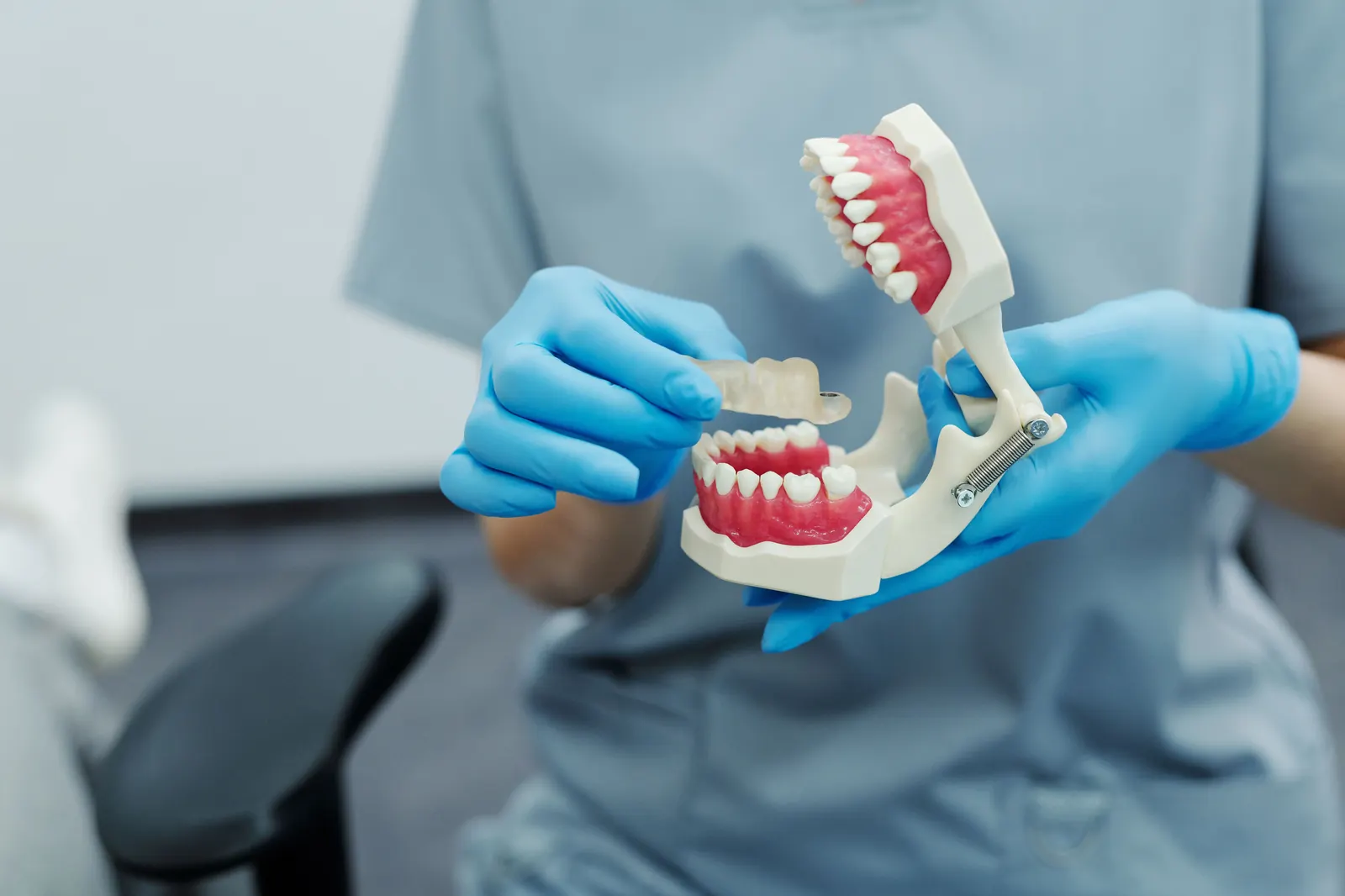
A hard acrylic occlusal splint, fabricated from impressions or digital scans of your teeth, worn at night. Distributes force across all teeth, prevents direct tooth-to-tooth contact, and protects existing restorations. Daily wear lasts 3–5 years before replacement. The most cost-effective single intervention.
Behavioural and lifestyle measures
Reducing caffeine after 2 PM, addressing alcohol use, sleep hygiene improvements (consistent sleep time, cool dark room, no screens 30 minutes before bed), stress management (CBT, mindfulness apps, exercise). Helpful adjuncts but not standalone treatment.
Masseter muscle Botox (second line)
For severe cases unresponsive to splint therapy, or for patients with significant masseter hypertrophy and jaw pain. Botulinum toxin injected into the masseter muscle reduces grinding force without affecting normal chewing function. Effect lasts 3–4 months; most patients have repeat injections every 4–6 months. Increasingly common in the UK private sector.
Sleep study and OSA treatment
If bruxism is associated with witnessed snoring, observed breathing pauses, or daytime sleepiness, sleep study referral is appropriate. Treating obstructive sleep apnoea with CPAP or a mandibular advancement device often resolves the bruxism that accompanied it.
Restorative rehabilitation
For patients who have already lost significant tooth structure to bruxism, full-mouth rehabilitation with bite raising and increased occlusal vertical dimension is needed. This is large, complex work that should not be undertaken without ongoing bruxism management — placing crowns or veneers without addressing the grinding is a recipe for repeat failure.
For UK patients planning veneers or implants in Istanbul
Active untreated bruxism is a contraindication for cosmetic veneer work and a relative contraindication for implants. Before we accept a smile-design or implant case in a known bruxism patient, the protection plan has to be in place — typically a night guard included in the treatment, sometimes Masseter Botox, occasionally a referral back to a sleep physician for OSA workup. Skipping this step is the single most common reason cosmetic dentistry fails. Our guide to dental night guards covers the protective device side in more detail.
Frequently asked questions
How do I know if I grind my teeth?
Most patients do not feel themselves grinding because it happens during sleep. The signs are jaw stiffness or headache on waking, partner reports of grinding noise, dentist observation of wear or cracks, and visible flattening of front teeth. A two-week sleep observation by a partner or self-monitoring app is reasonable diagnostic work.
Will Masseter Botox change the shape of my face?
Significant masseter hypertrophy with prominent jaw angles will soften visibly within 4–6 weeks of injection. For most patients this is a desired aesthetic side effect. The effect is fully reversible if injections are not repeated. Some practitioners use it for jaw-line slimming alone, separate from bruxism treatment.
How long does a night guard last?
A well-made hard acrylic guard worn nightly lasts 3–5 years. Soft over-the-counter guards last weeks to months and are not suitable for moderate-to-severe bruxism. Replacement is signalled by visible wear, fit changes, or fracture lines in the guard itself.
Is teeth grinding hereditary?
There is a clear familial pattern — bruxism is more common in patients whose parents or siblings grind. The genetic basis is not fully mapped, but the risk concentration is real. If a parent has a history of veneer or crown failure attributed to grinding, that is a useful red flag for the next generation.