
Zirconia has replaced porcelain-fused-to-metal as the gold standard for posterior crowns: fracture-resistant, biocompatible, and with no metal margin showing at the gumline. Below: the clinical categories and the decisions that appear on your written plan.
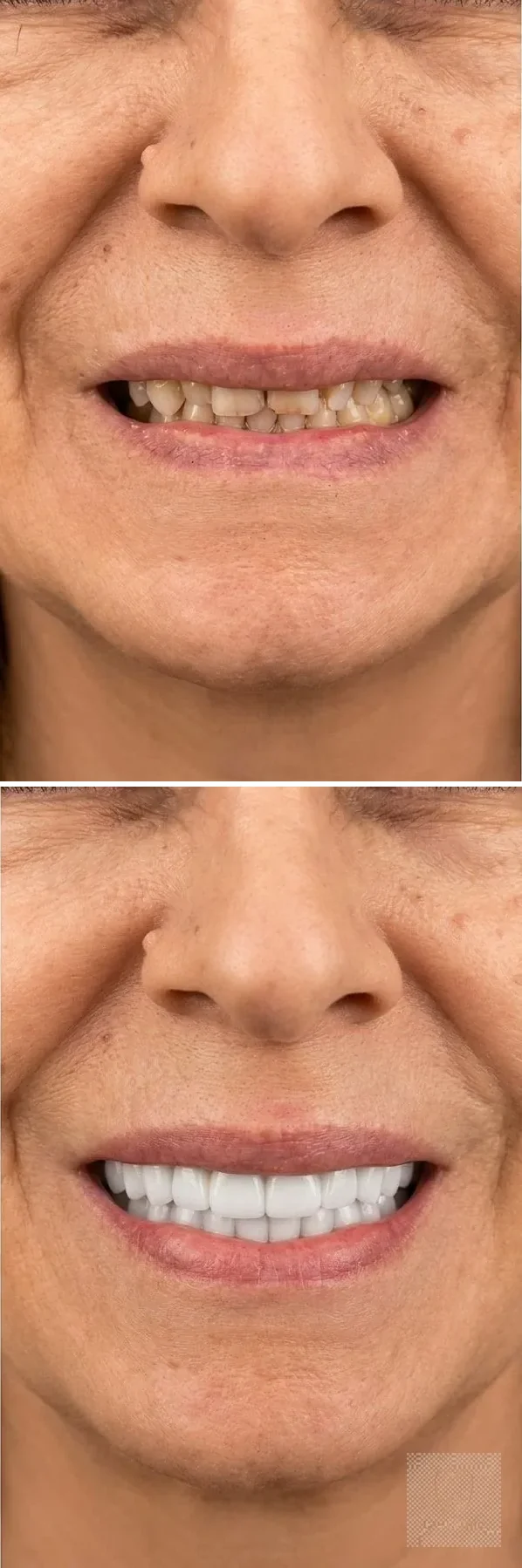
First generation — 3Y-TZP (full-strength zirconia): maximum fracture resistance (> 1,200 MPa), but a slightly opaque, whitish appearance. Used today for posterior bridges and molars. Not recommended for the front teeth — it looks too opaque.
Second generation — 4Y/5Y-TZP (translucent zirconia): more translucent thanks to a higher yttria content. Aesthetically usable on premolars and canines. Fracture resistance 800–1,000 MPa — still superior to lithium disilicate.
Third generation — multilayer zirconia: a graduated colour and translucency gradient inside the crown. Translucent at the incisal edge, opaque at the cervical margin. Natural-looking front-tooth aesthetics with acceptable strength (700–900 MPa).
Monolithic: the entire crown is milled from a single zirconia block and glazed. No veneering ceramic that can chip. Recommended for patients with bruxism, for posterior teeth and for bridges under heavy chewing load.
Layered: a zirconia coping with veneering ceramic fired on top (typically e.max Ceram or equivalent). The most natural-looking option, but a 5–8% chipping risk under heavy load. Recommended for anterior and premolar single crowns.
Zirconia crowns require 1.0–1.5 mm of circumferential reduction. We take shade digitally (VITA Easyshade) alongside the classical shade guide — the two methods complement each other. For demanding aesthetic cases we make a try-in crown for fitting before the final crown is glazed.
10-year survival rate, monolithic zirconia: 95–98% (compare: porcelain-fused-to-metal 90–94%, single e.max 92–95%). Chipping risk on layered zirconia crowns 5–8% over 10 years — usually repairable without replacing the crown. Our crown warranty: 5 years against material defect, in line with our published policy.
Polishing instead of re-glazing: on monolithic zirconia, the surface can be polished to a high gloss directly in the mouth after any chairside adjustment, with no need to re-fire. Fewer try-in appointments, less wear on opposing teeth than glazed zirconia. London vs Istanbul crown cost: a single monolithic zirconia crown typically costs £750–£1,200 in central London; our equivalent in Istanbul is set out below.
Standard monolithic: £319 per crown · Premium (4Y multilayer): £482 per crown · VIP (multilayer with individual characterisation): £649 per crown. London private: £750–£1,400 per crown for an equivalent specification. Translates to a typical 60–70% saving for a 6–8 crown plan, before travel.
Service standard: WhatsApp reply within 30 minutes during business hours · Written plan within 4 hours of your records.