
Both are full-ceramic restorations — but they cover different amounts of tooth and suit different clinical situations. This matrix shows when each is the right answer for you.
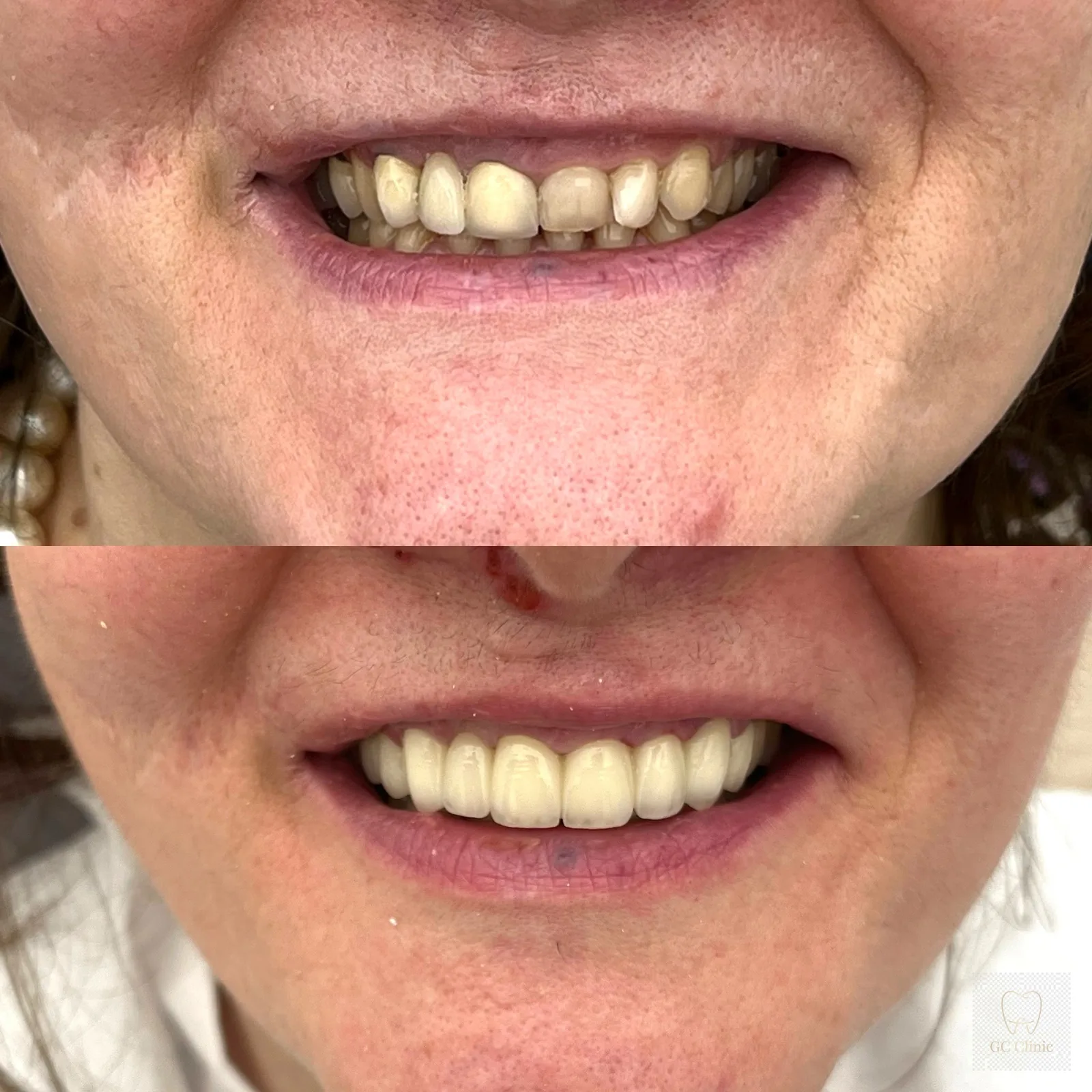 Comparison
A veneer is a 0.3–0.7 mm thin ceramic shell that covers only the front face of the tooth. A crown encloses the whole tooth — the tooth is reduced by 1.5–2 mm all around.
The clinical principle: as little as possible, as much as needed. Whenever a veneer is sufficient, more healthy tooth is preserved.
Only the front face is involved · tooth substance largely intact · main goal is aesthetics (shape, colour, gap closure) · no heavy chewing load.
Root-canal-treated tooth (fracture risk) · heavy substance loss · posterior tooth with high chewing load · implant restoration · bruxism.
Three-quarter veneer or overlay — additionally covers the incisal edge or cusp. A compromise between tissue preservation and stability.
Tooth reduction, pulp proximity, occlusion and bruxism markers reviewed.
A DSD mock-up visualises the veneer vs crown outcome before you commit.
Written plan delivered within 4 hours, containing both options. You decide.
Where there is doubt, a composite mock-up offers a reversible trial in your own mouth.
Send a photo on WhatsApp. Reply within 30 minutes during business hours; full written plan within 4 hours. Dr. Cansu Öztürk personally reviews every aesthetic case.